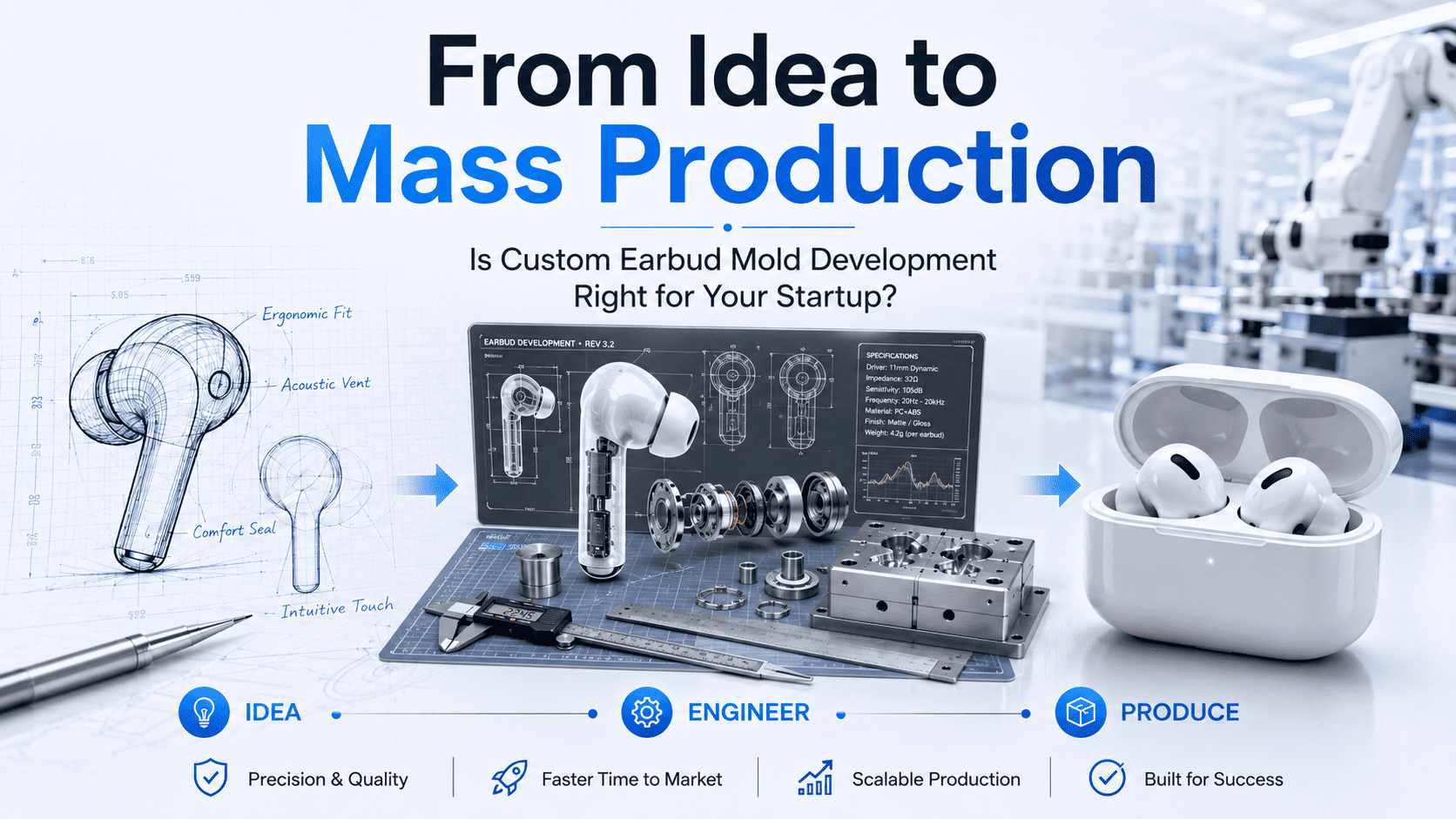
I see many passionate startup founders. They come with exciting earbud designs. But a great visual idea is not yet a real product. The journey from a drawing to mass production is complex. It involves more than just a mold.
Custom mold development for earbuds requires evaluating manufacturability, budgeting for structural review, prototyping, and extensive testing, not just mold costs. It suits startups with clear market validation, significant order volumes, and a budget covering the entire process from design feasibility to stable mass production, ensuring differentiation and quality.
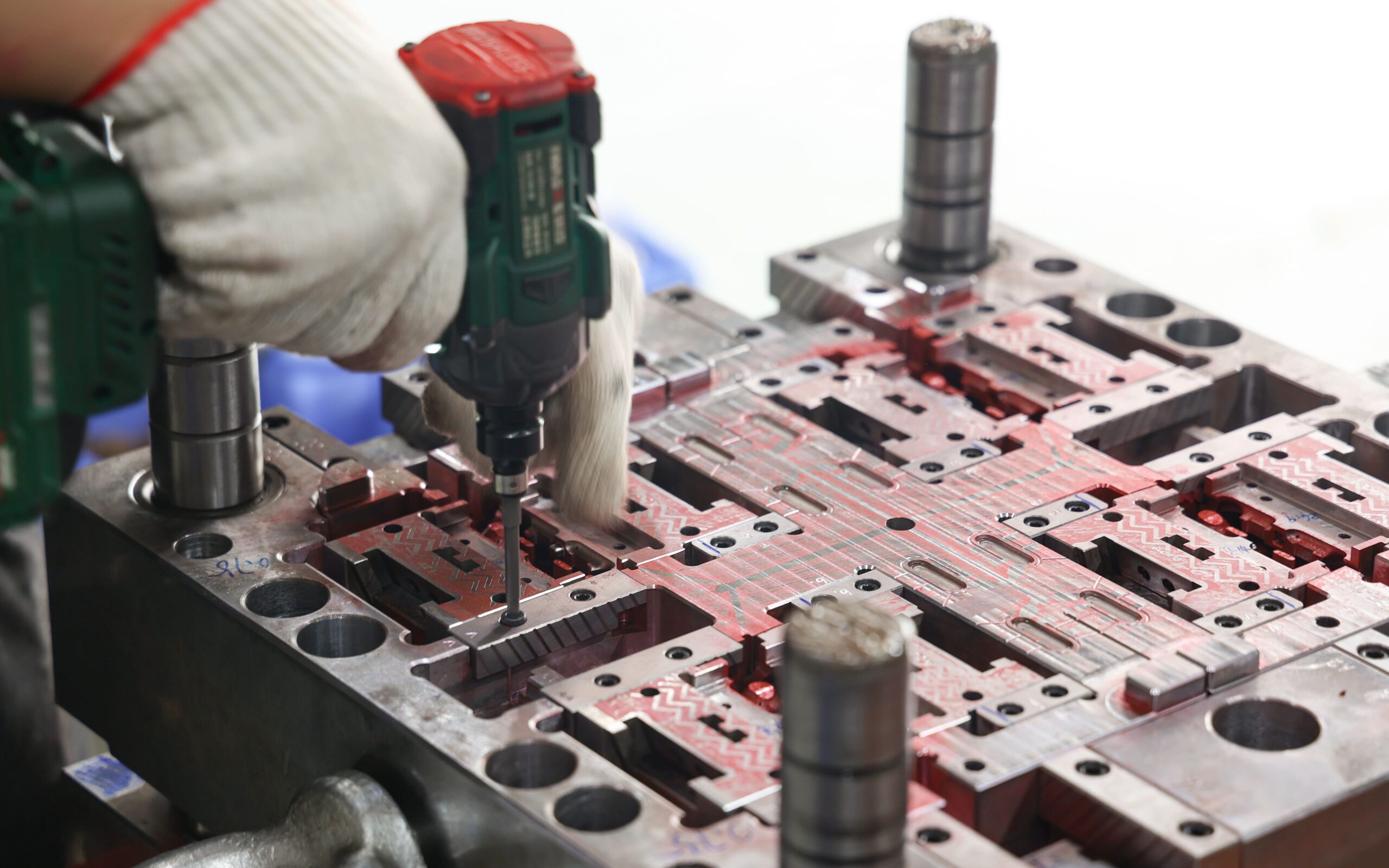
I understand the excitement of a unique product. I talk to startups every day. They want to make their mark. But this path has many hidden steps. It has many costs. Let me share what I have learned. I will show you what it really takes to bring a custom earbud to life.
Is Your Earbud Design Truly Ready for Manufacturing?
You have a fantastic earbud design concept. You picture it in customers' hands. But a beautiful rendering is not a working earbud. It will not make sound without careful planning.
For an earbud design to be manufacturable, it must leave adequate internal space for crucial components like the battery, PCB, speaker, microphone, antenna, and charging contacts, while also accounting for assembly tolerances.1 This ensures functional integrity and reliable production.
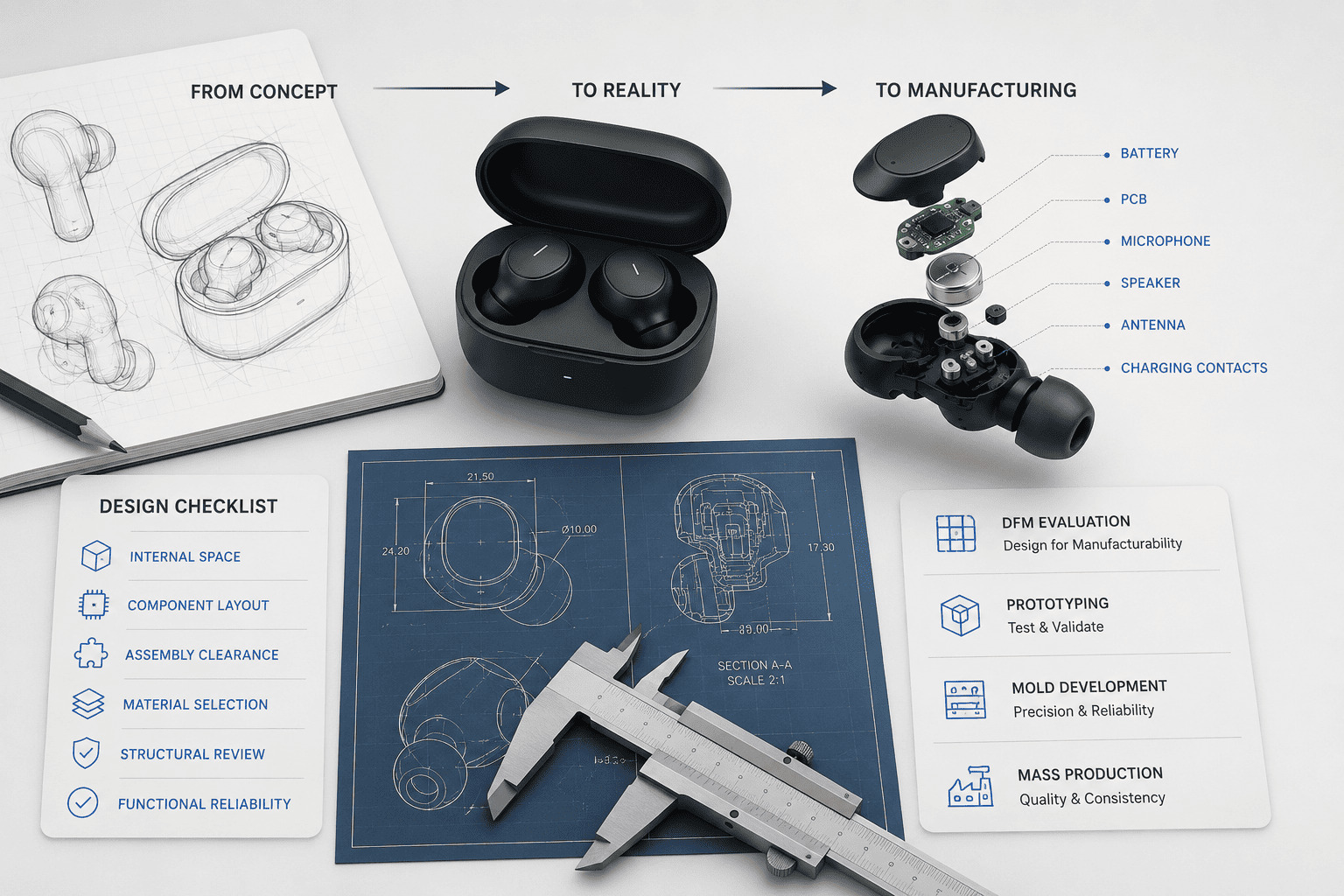
This is where I've seen many startups get stuck. They bring me a beautiful rendering. I see a sleek, minimalist shape. But I know what goes inside. I remember one founder, very passionate. He showed me a design. It looked great. I had to ask him, "Where do you plan to put the battery? What about the antenna? How will the circuit board fit?" He had not considered these details. A real earbud needs to fit many parts. These include the driver, the main PCB, a battery, microphones for calls and ANC, an antenna for Bluetooth, and charging contacts.2 Every component needs its own space. Then there are wires. There are also mounting points. We need space for assembly. Without enough room, parts cannot fit. Or assembly becomes too hard. This leads to high reject rates. It also makes costs go up. Structural review at the start is key. We check if the design allows for all parts. We check for assembly space. We also need to think about materials. What plastic will work best? Can it be molded easily? What about strength? These questions come first. They come before any mold is cut. We often work with our engineers. We help redesign small parts. This makes sure everything fits. It makes sure the product works.
Is "Mold Cost" the Only Price You Should Worry About?
Everyone asks me, "How much does the mold cost?" This is a natural first question. But focusing only on this can lead to big surprises later. That mold cost is just one part.
The "mold cost" is only a fraction of the total investment for custom earbud development.3 Startups must budget for structural reviews, initial prototypes, mold trials, design iterations, extensive functional and reliability testing, and pilot production runs, which significantly add to the overall project expense.
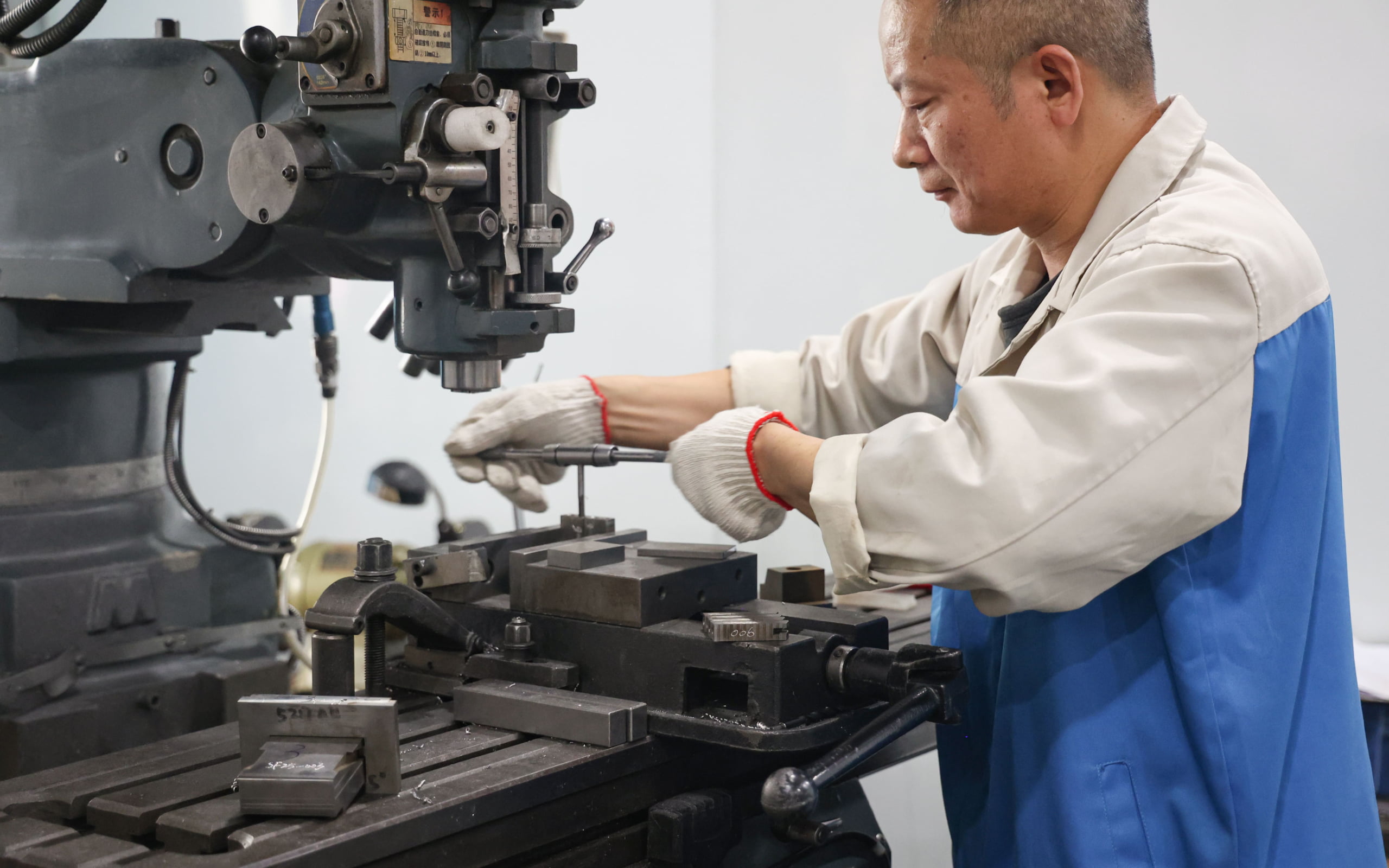
I've had so many calls starting with that one question: "How much for the mold?" It is natural to focus on that. It feels like the big hurdle. But it is really the tip of the iceberg. I often explain it like this: think of building a house. The cost of the land is one thing. But then you have architects. You have builders. You have materials. You have inspections. All these add up. For custom earbud molds, it is similar. There are many steps. Each step costs money and time.
Beyond the Mold Cost: The Real Project Expenses
- Structural Review Fees: Before we make a mold, engineers check your design. They make sure it can be manufactured. They look for weak points. This ensures parts fit together. This review costs money.
- Prototype Fees: We often make 3D printed prototypes first. This helps check the fit. It helps check the feel. It helps test basic assembly. These prototypes are not free.
- Mold Trial Shots: Once the mold is ready, we do not start mass production immediately. We run trial shots. We check how the plastic flows. We check for defects. We adjust settings.4 This takes time and uses materials.
- Design Modification Costs: It is rare that the first mold is perfect. Often, small changes are needed. Maybe a snap fit is too tight. Maybe a port needs a slight shift. Each change can mean mold adjustments. This adds costs and delays.
- Functional Testing: The product needs to work as advertised. We test audio quality. We test battery life. We test Bluetooth range. We test ANC performance.5 These all need rigorous testing. This is not a quick check.
- Reliability Checks: Earbuds get dropped. They get wet. They get used daily.6 We need to test durability. We test temperature tolerance. We ensure they last a long time.7
- Pilot Production: Before full mass production, we do a small production run. This helps iron out any final issues.8 It confirms the entire assembly line works smoothly.
This whole process is part of the project. It all costs money. A startup needs to budget for all these steps. Do not just look at the mold price. Look at the full project cost.
When Does Custom Molding Make Sense for Your Order Volume?
A unique product sounds amazing. It makes your brand stand out. But is your market strategy ready for a completely new mold? This is a key question I ask many startups.
Custom molding is most suitable for startups with validated market demand, clear differentiation goals, and target order quantities that justify the significant upfront investment9 and development timeline. For early-stage validation or lower volumes, modifying a public mold or using an ODM solution offers lower risk and faster market entry.
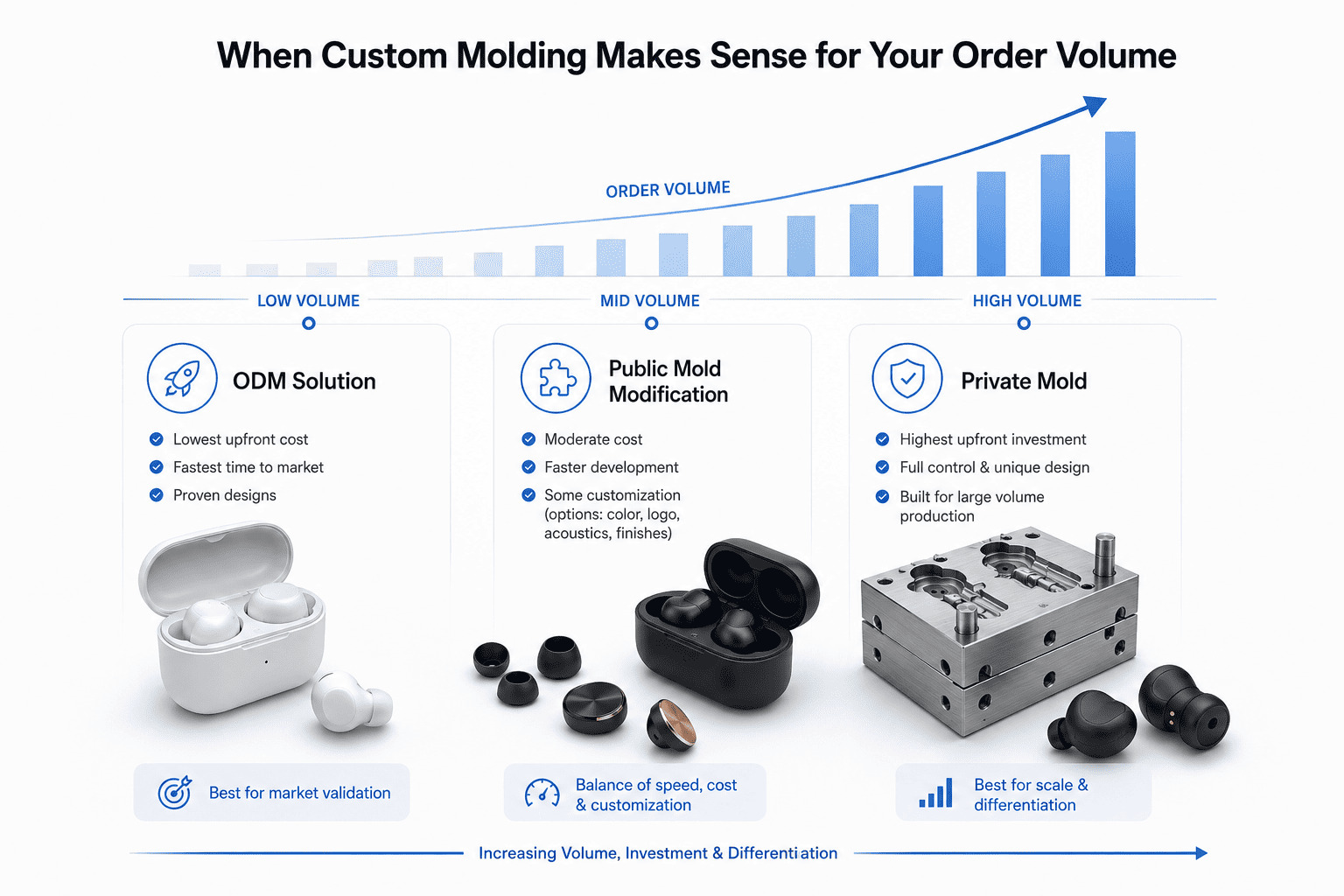
I often talk to startups excited about having a totally unique product. It is a great goal. A private mold gives you full control. It makes your product stand out. But it also needs a certain scale. Think about a custom mold as a big commitment. It is like building a custom car. You would not do that for a single test drive. You would do it if you know many people will buy that car.
Choosing Your Mold Path: Private vs. Alternatives
- Private Mold (Custom Mold):
- Pros: Complete control over design, truly unique look, strong brand identity.
- Cons: High upfront cost, long development time, high minimum order quantity (MOQ) for mass production.
- Best for: Startups with proven market demand. They need substantial funding. They have large-scale distribution plans (e.g., more than 50,000 units annually).
- Public Mold Modification:
- Pros: Lower cost, faster development, still some customization possible (color, finish, branding, acoustic tuning).
- Cons: Less unique overall shape compared to a private mold.
- Best for: Market validation, smaller initial batches. It works for startups with less budget or tighter timelines.
- ODM (Original Design Manufacturer) Solution:
- Pros: Fastest time to market, lowest upfront cost, proven designs.
- Cons: Limited uniqueness in appearance (often just branding).
- Best for: Initial market entry, very low budget, quickly testing features in the market.
My experience tells me this: if your target order quantity is low, say below 10,000 units per year, a private mold is often too expensive per unit10. The cost of the mold itself gets spread across fewer products. This makes each earbud too costly. It makes it hard to compete. Also, if you are still testing the market, a private mold ties up a lot of capital. It also locks you into one design. What if the market changes? What if your initial idea needs tweaks? For startups, sometimes a modified public mold is smarter. It lets you get to market faster. It costs less. You can still brand it. You can still tune the sound. You can still offer unique features inside. This lets you validate your idea. It lets you build sales. Then, when you have clearer market proof, you can think about a fully custom mold. This is a strategic choice. It depends on your stage. It depends on your budget. It depends on your market validation plan.
What's the Right First Conversation for a Truly Custom Earbud?
Many startups come with just a picture. They say, "I want this." But that picture tells us little about a viable product. To really help, I need more information.
The most productive first conversation for custom earbud development goes beyond just visual design. It should cover target order volume, desired cost, essential features, precise dimensions, intended wearing scenarios, and long-term production plans to ensure commercial and technical feasibility.
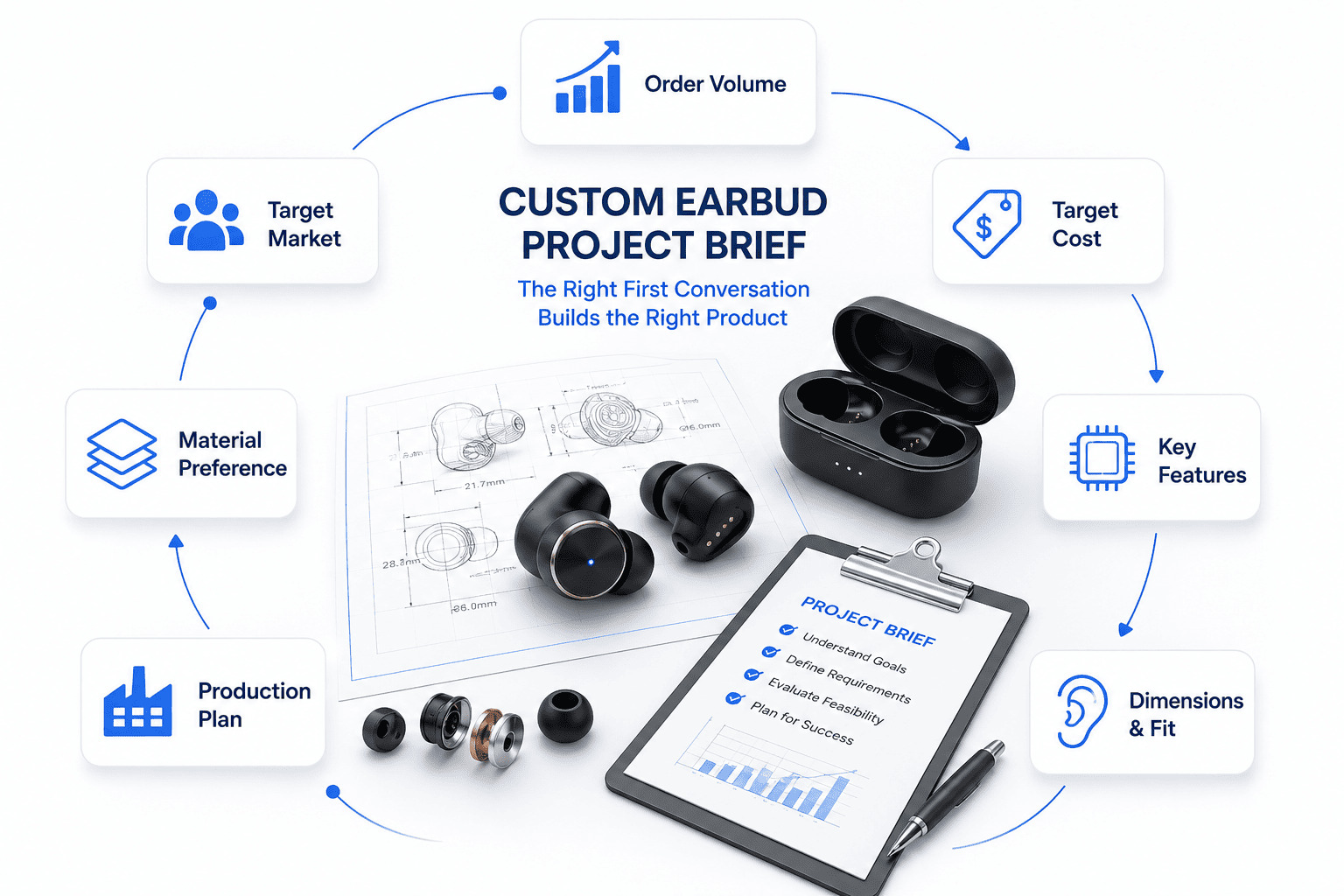
I've seen it many times. A startup founder reaches out. They say, "I have this amazing design. Can you copy this shape?" Or they send a picture. It is a start. But it is not the right beginning for a successful project. That picture is just one piece. I always try to guide them. I ask them more detailed questions. I want to understand their whole vision. This helps us assess if it can become a real product. And if it can be a successful one for them.
Key Discussion Points for a Custom Earbud Project
- Target Order Volume: How many units do you plan to sell each year? This is crucial for tooling cost recovery. It helps us suggest the right production method.
- Target Cost: What is your desired cost per unit? This helps us choose materials. It helps us select components. It impacts the complexity of the mold.
- Key Features: What must your earbuds do? ANC? ENC? Low latency? Multi-device pairing? These features impact the internal design. They impact component selection.
- Dimensions and Wearing Scenario: How big should they be? How will they be worn? In-ear? Over-ear? For sports? For calls? This affects comfort and stability. It affects structural integrity.
- Future Production Plan: What are your long-term goals? Are you looking for a one-time batch? Or ongoing supply? This impacts how we set up the production line.
- Material Preferences: Do you have specific materials in mind? Matte finish? Glossy? Special colors?
- Target Market: Who are you selling to? What are their expectations for quality and price?
I remember one client who wanted a very small earbud. His design was tiny. We had to explain. "To get ANC and good battery life, we need more space. Your current design cannot hold these parts." We then worked with him. We found a balance. We kept the small look. But we made sure it had space for the needed functions. This open talk upfront saves huge amounts of time. It saves money later on. It makes sure we are building what you actually need. Not just what looks good on paper. It helps us avoid costly redesigns. It sets the project up for success.
Conclusion
Custom earbud mold development is a big project. It needs more than just a design and mold cost. It requires careful planning, budget for all steps, and clear market goals. This ensures your unique product succeeds.
"Mechanical Assembly - NASA SSRI Knowledge Base - S3VI", https://s3vi.ndc.nasa.gov/ssri-kb/topics/34/. Design-for-manufacturing (DFM) principles in electronics require adequate spatial allocation for components and assembly tolerances to ensure production feasibility, though specific requirements vary by product complexity and manufacturing method. Evidence role: general_support; source type: education. Supports: Design-for-manufacturing principles require adequate component spacing and assembly tolerances in electronic products. Scope note: General DFM principles rather than earbud-specific standards ↩
"How do Wireless Earbuds and Audio Codecs Work? - YouTube",
. Technical analyses of true wireless stereo (TWS) earbuds document integration of acoustic drivers, battery cells, Bluetooth system-on-chip with antenna, MEMS microphones, and charging interfaces within compact form factors, representing typical component architecture for modern wireless earbuds. Evidence role: mechanism; source type: research. Supports: True wireless earbuds integrate multiple miniaturized components for audio, power, connectivity, and user interaction. ↩"How to Estimate Injection Molding Cost? - Formlabs", https://formlabs.com/blog/injection-molding-cost/. Manufacturing economics research indicates that tooling costs typically constitute 15-30% of total new product development investment, with testing, prototyping, and process validation representing significant additional expenses, though exact proportions vary by product complexity and production volume. Evidence role: general_support; source type: research. Supports: Tooling costs typically represent 15-30% of total new product development expenses in manufacturing. Scope note: General manufacturing economics rather than earbud-specific data ↩
"Process Validation for Medical Injection Molding | Penn State Behrend", https://behrend.psu.edu/community-and-workforce-programs/plastics-training-academy/courses/process-validation. Injection molding process documentation describes mold commissioning procedures including trial shots to validate plastic flow, identify defects such as short shots or flash, and optimize process parameters including temperature, pressure, and cycle time before production approval. Evidence role: mechanism; source type: education. Supports: Injection molding commissioning requires trial runs for process parameter optimization. ↩
"General Use Products: Certification and Testing | CPSC.gov", https://www.cpsc.gov/Business--Manufacturing/Testing-Certification/General-Use-Products-Certification-and-Testing. Bluetooth Special Interest Group (SIG) certification and consumer electronics quality standards require functional testing across multiple parameters including wireless connectivity, audio performance, and battery operation, though specific test protocols vary by product category and target market. Evidence role: general_support; source type: institution. Supports: Wireless audio devices require multiple functional tests including connectivity, audio performance, and power management. Scope note: General wireless device testing rather than comprehensive earbud-specific protocols ↩
"Cultural and Demographic Factors Influencing Noise Exposure ...", https://pubmed.ncbi.nlm.nih.gov/24686749/. Consumer electronics usage studies document that portable devices including earbuds experience mechanical impacts from drops, environmental exposure to moisture and temperature variation, and repeated daily use cycles, informing durability and ingress protection requirements for product design. Evidence role: general_support; source type: research. Supports: Portable consumer electronics experience varied environmental and mechanical stresses during typical use. ↩
"E-Waste More Information | Department of Toxic Substances Control", https://dtsc.ca.gov/e-waste-more-information/. International Electrotechnical Commission (IEC) standards and consumer electronics reliability frameworks specify environmental testing including temperature cycling, mechanical stress, and durability validation to ensure product longevity, though specific test parameters depend on intended use conditions and product classification. Evidence role: general_support; source type: institution. Supports: Consumer electronics require environmental and mechanical reliability testing per international standards. Scope note: General electronics standards rather than earbud-specific reliability requirements ↩
"[PDF] Process Validation: General Principles and Practices | FDA", https://www.fda.gov/files/drugs/published/Process-Validation--General-Principles-and-Practices.pdf. Manufacturing process management literature describes pilot production or pre-production runs as standard practice to validate manufacturing processes, identify assembly issues, and confirm quality systems before full-scale production, reducing risk of large-scale defects. Evidence role: mechanism; source type: education. Supports: Pilot production runs serve as validation before full-scale manufacturing. ↩
"Economic Order Quantity (EOQ) | www.waru.edu", https://www.waru.edu/acquipedia-article/economic-order-quantity-eoq. Manufacturing economics literature indicates that custom tooling investments require production volumes sufficient to amortize fixed costs across units, with break-even analysis depending on tooling costs, unit margins, and production timeline, making market validation critical for investment decisions. Evidence role: general_support; source type: education. Supports: Custom tooling investments require sufficient production volumes to achieve acceptable unit economics. Scope note: General manufacturing economics principles rather than specific volume thresholds ↩
"Economic Order Quantity (EOQ) | www.waru.edu", https://www.waru.edu/acquipedia-article/economic-order-quantity-eoq. Manufacturing cost analysis shows that fixed tooling costs distributed across low production volumes significantly increase per-unit costs, with economic viability thresholds varying based on tooling complexity, material costs, and alternative manufacturing methods available, though specific volume thresholds depend on individual project parameters. Evidence role: general_support; source type: research. Supports: Low production volumes increase per-unit tooling costs, affecting manufacturing method selection. Scope note: General cost principles rather than validation of the specific 10,000-unit threshold ↩