
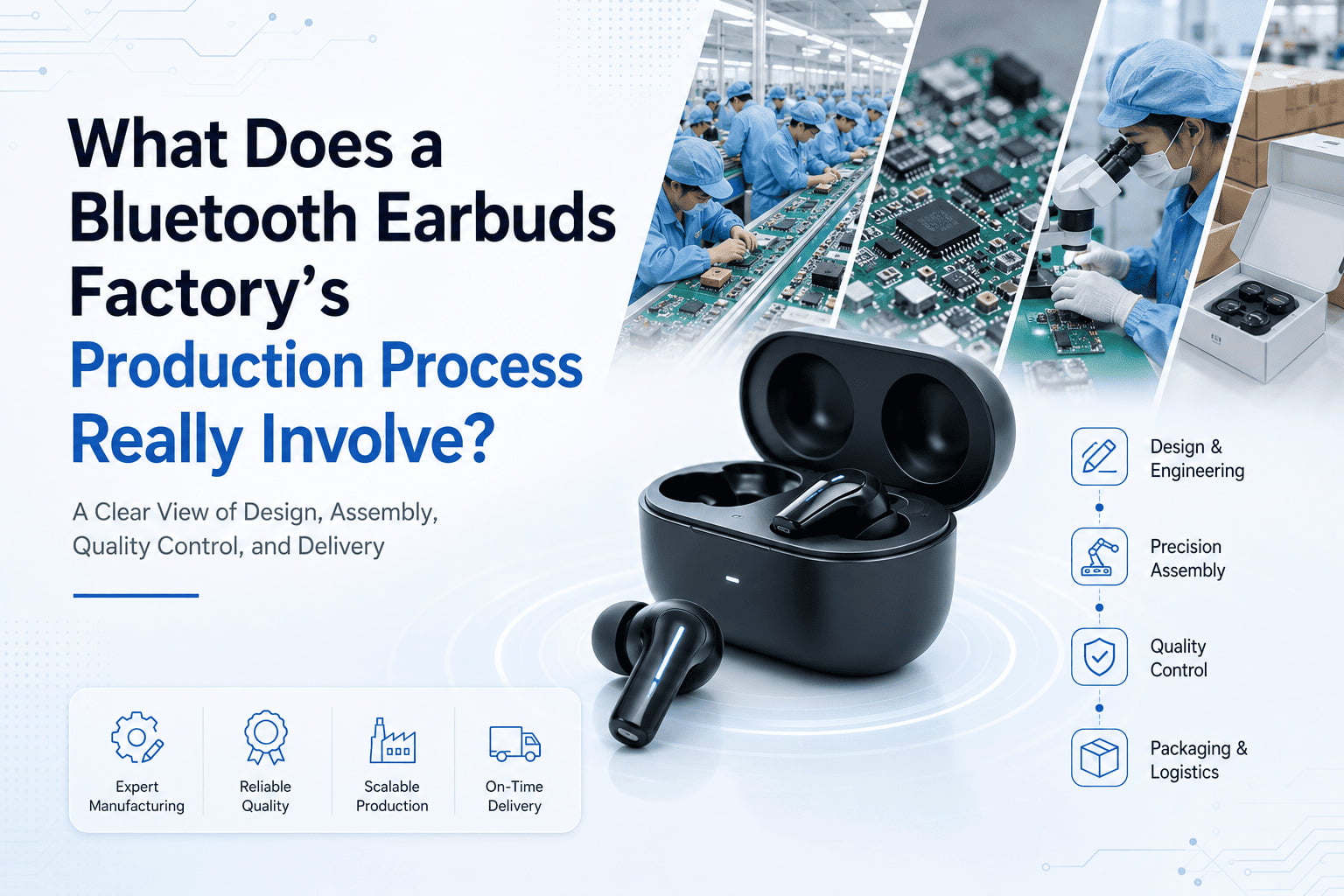
Struggling with inconsistent earbud quality? You approve a perfect sample, but the bulk order has defects. This uncertainty costs you money and damages your brand's reputation.
A professional factory's production process is a series of quality control checkpoints. It starts with strict material inspection1 and ends with final aging tests2. This system ensures mass-produced earbuds match the approved sample, preventing costly defects and delays.
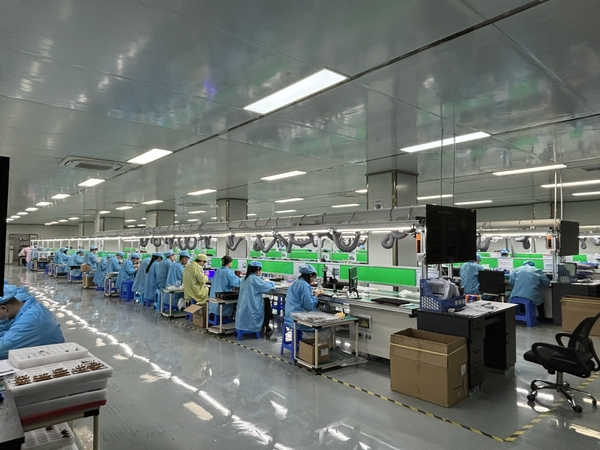
I’ve spent years on the factory floor, and I’ve seen many buyers think making earbuds is just simple assembly. They believe you just put the parts together, and you’re done. But the reality is much more complex. A great sample means nothing if the factory can't replicate it thousands of times perfectly. The real value of a good manufacturing partner is in their process. It’s a system designed to catch problems before they ever reach your customers. Let me walk you through what that disciplined process looks like from our side, from an initial idea to a container ready for shipment.
How Does the Process Start Before Assembly Even Begins?
Your product's success is decided long before the first unit is built. It starts with defining the project and selecting the right components, which is a huge risk.
This initial stage, called pre-production, is where we lock in the core technology and verify every single component. We select the right Bluetooth chipset3 and test all incoming materials to ensure they meet quality standards before they ever enter the main production line.
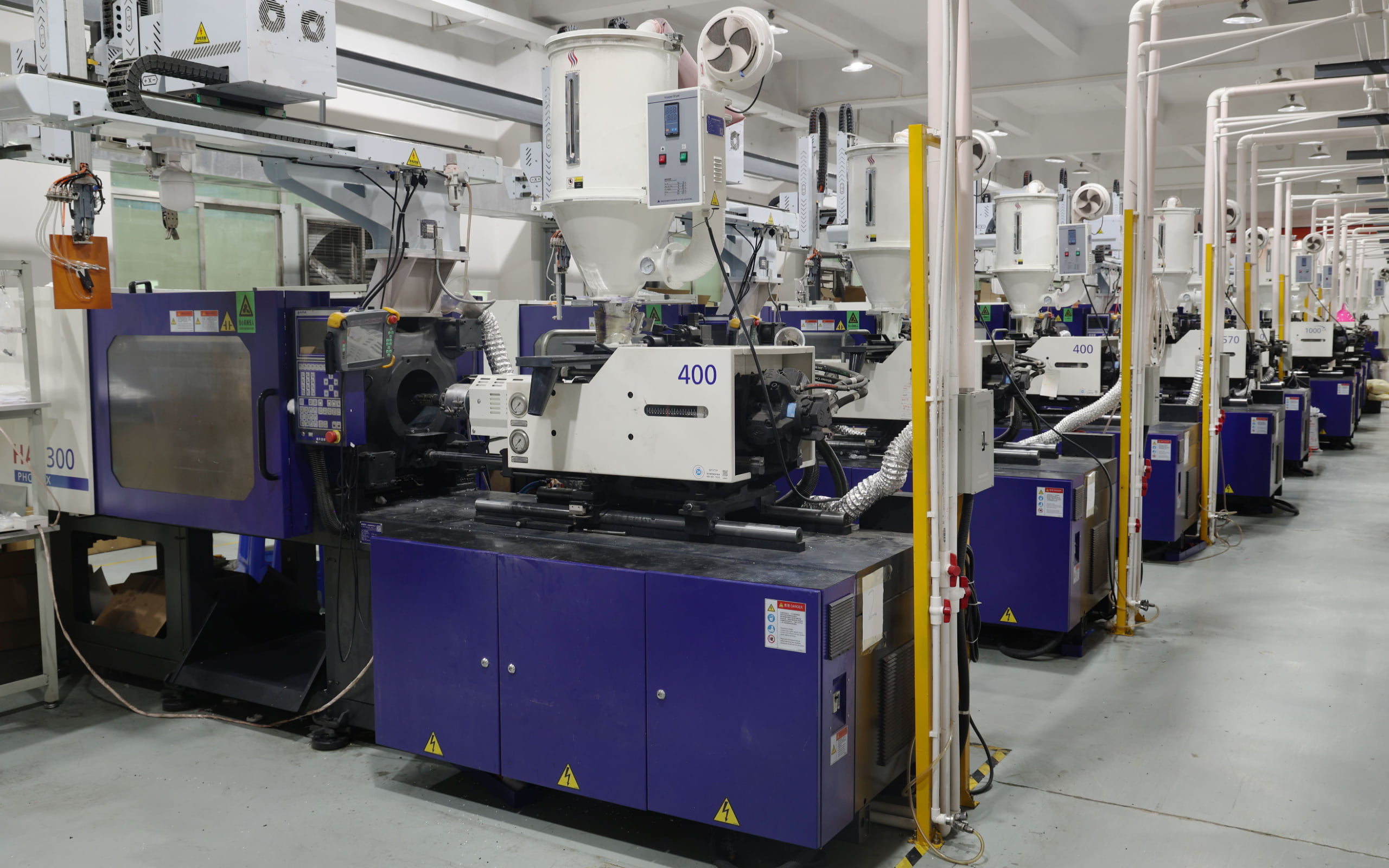
Many people overlook this phase, but in our factory, it's one of the most critical. This is where we control quality at the source. It starts with a deep discussion about your needs. Are you targeting gamers who need low latency, or business users who need clear calls with ENC? The answer determines the Bluetooth solution we choose, whether it’s from Qualcomm, Realtek, or JL. Once the core components are selected, our Incoming Quality Control (IQC) team takes over. They don't just count boxes. They perform rigorous tests on every batch of materials. For us, this isn't just a formality; it's the first line of defense against mass production failures. A bad batch of batteries4 or speakers can ruin an entire order, so we work to stop that from happening.
Key IQC Checks for Critical Components
| Component | Key Checks We Perform | Why It Matters |
|---|---|---|
| Batteries | Capacity, voltage, cycle life, internal resistance | Prevents short battery life, charging failures, and safety hazards. |
| Speakers (Drivers) | Frequency response, impedance, sensitivity, distortion5 | Ensures consistent sound quality and proper stereo balance. |
| Microphones | Sensitivity, signal-to-noise ratio | Guarantees clear call quality and effective ENC/ANC performance. |
| Plastic Shells | Dimensions, color consistency, material strength | Prevents assembly issues, ensures durability, and maintains brand aesthetics. |
What Happens During the Core PCBA and Driver Assembly?
You have great components, but now they must become the earbud's heart and soul. This is where the electronics come to life, and small errors can cause major functional failures.
This stage involves mounting tiny components onto the Printed Circuit Board Assembly (PCBA) using SMT machines. We then test each PCBA and pair-match the speaker drivers to ensure the core electronic functions and audio performance are perfect before final assembly.
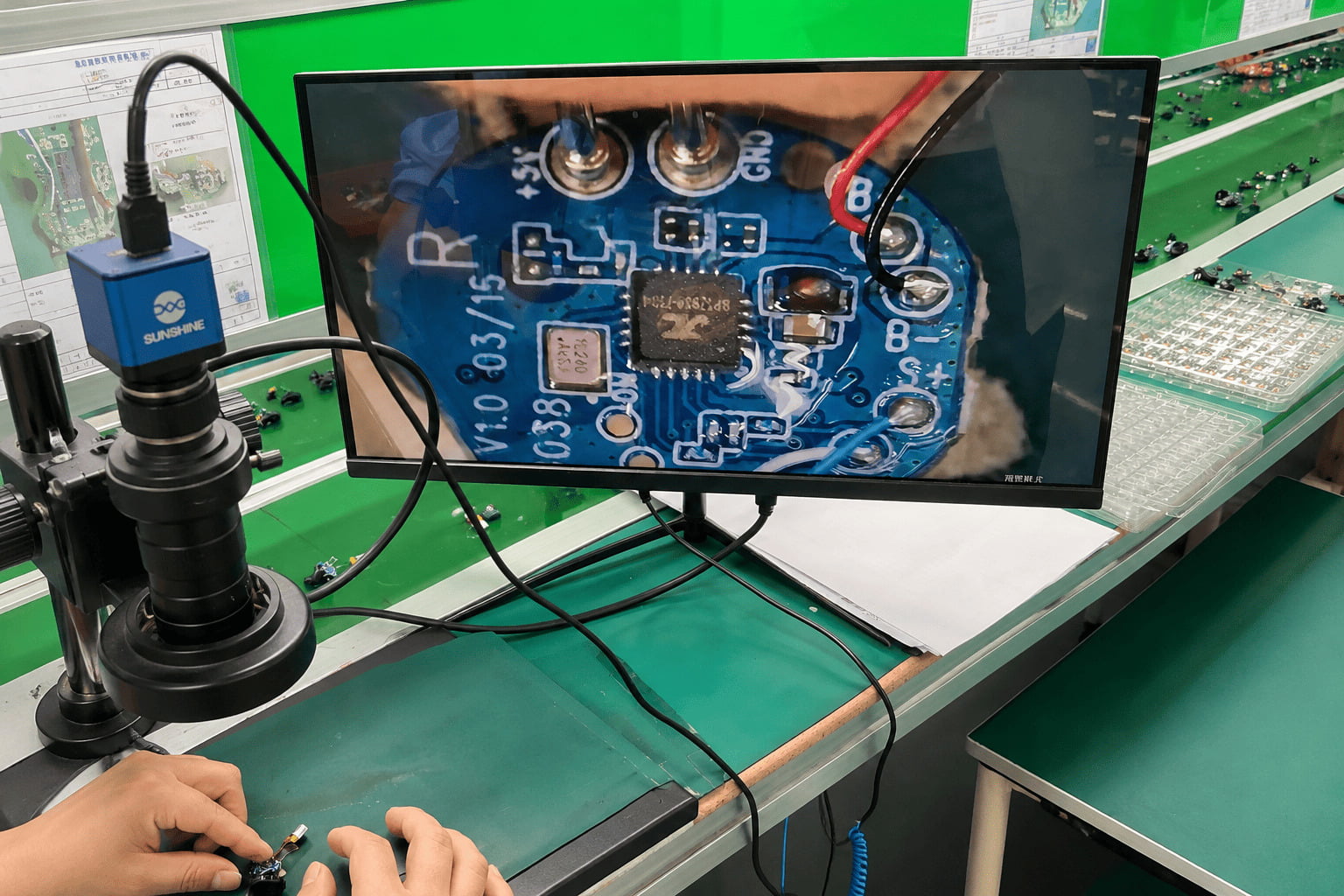
This is where true manufacturing precision comes into play. The PCBA is the brain of the earbud. We use high-speed Surface Mount Technology (SMT) machines6 to place hundreds of tiny components accurately. After SMT, every single board goes through an automated test. We check for power, connectivity, and basic functions. A board that fails here is immediately removed. We don't wait for the final assembly to find a problem; that would be too inefficient and costly. At the same time, we work on the audio. The speakers, or drivers, are tested and matched into pairs7. We do this to ensure that the left and right earbuds have a perfectly balanced sound. There's nothing worse than a stereo product where one side sounds different from the other. This attention to detail in the middle of the process is what separates a reliable factory from a simple assembly workshop.
Core Electronics Quality Control Points
- SMT & Reflow Soldering: We monitor oven temperatures closely to ensure strong solder joints without damaging sensitive components.
- Automated Optical Inspection (AOI)8: After soldering, a machine visually inspects each PCBA to catch any placement errors or soldering defects that the human eye might miss.
- Initial Functional Test: We run a software test on every PCBA to verify that the Bluetooth module, charging circuit, and touch controls are working correctly before it's sealed inside the earbud shell.
Why is Assembling the Earbuds and Charging Case So Critical?
All the tested components are ready. Now, they must be put together perfectly. This stage is a delicate balance of human skill and machine precision, where physical defects can easily occur.
Final assembly involves carefully placing the PCBA, battery, and driver into the earbud shell. We use techniques like ultrasonic welding9 to seal the unit, ensuring durability and a clean finish. Every step is designed to prevent physical damage and ensure a secure fit.
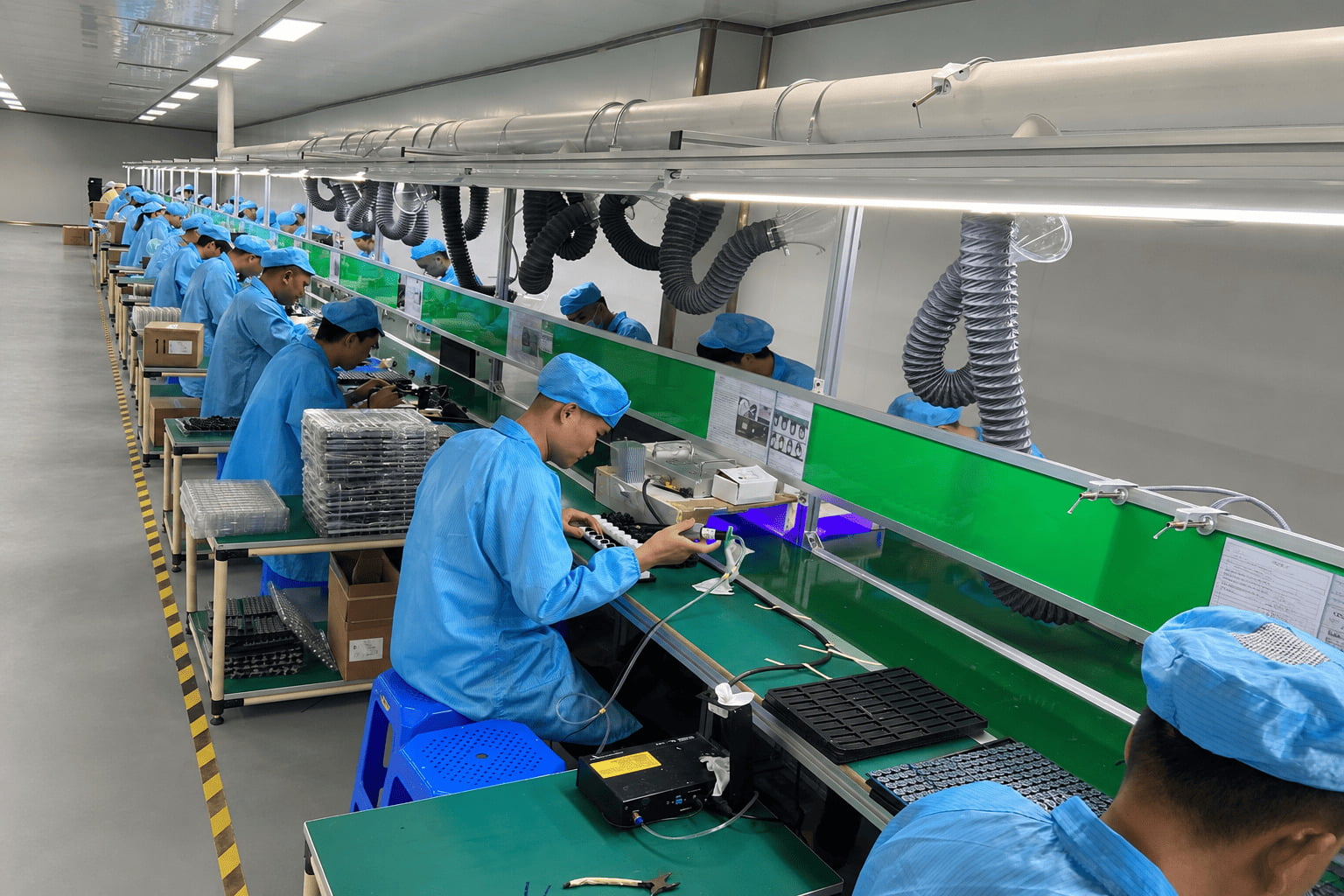
From my experience, this is the stage where a factory's discipline truly shows. Our assembly lines are not just about speed; they are about consistency. Each worker is trained for a specific task, whether it's soldering the battery wires or sealing the earbud casing. We pay special attention to battery handling. Each battery is placed with care to avoid pinching wires, which could create a short circuit10. The shells are often sealed using ultrasonic welding, which creates a strong, seamless bond without messy glue. Once the earbuds are assembled, the first real-world test happens: we pair them with each other and with the charging case. We confirm that the magnetic pins in the case align correctly and that both earbuds start charging immediately. A failure here could point to a physical assembly error, and we want to catch that right away.
Key Steps in the Assembly Process
- Internal Wiring: Technicians carefully solder the wires from the battery and speaker to the PCBA. Insulation is double-checked to prevent shorts.
- Component Seating: All internal parts are placed into the plastic housing, ensuring a snug fit with no rattling.
- Sealing: The earbud shells are permanently sealed. We prefer ultrasonic welding because it's cleaner and stronger than glue.
- Charging Case Assembly: The case's battery, PCBA, and charging pins are assembled and tested to ensure they deliver a stable charge to the earbuds.
How Do We Ensure Every Unit Works Perfectly Before Shipping?
The earbuds are fully assembled, but they aren't ready for your customers yet. A product that works on the assembly line might fail after a week. We have to simulate real-world use.
We conduct 100% functional testing on every single earbud, followed by a batch aging test. This involves hours of continuous charging and discharging to catch hidden battery or electronic issues. Finally, our quality assurance team performs a random inspection based on AQL standards.
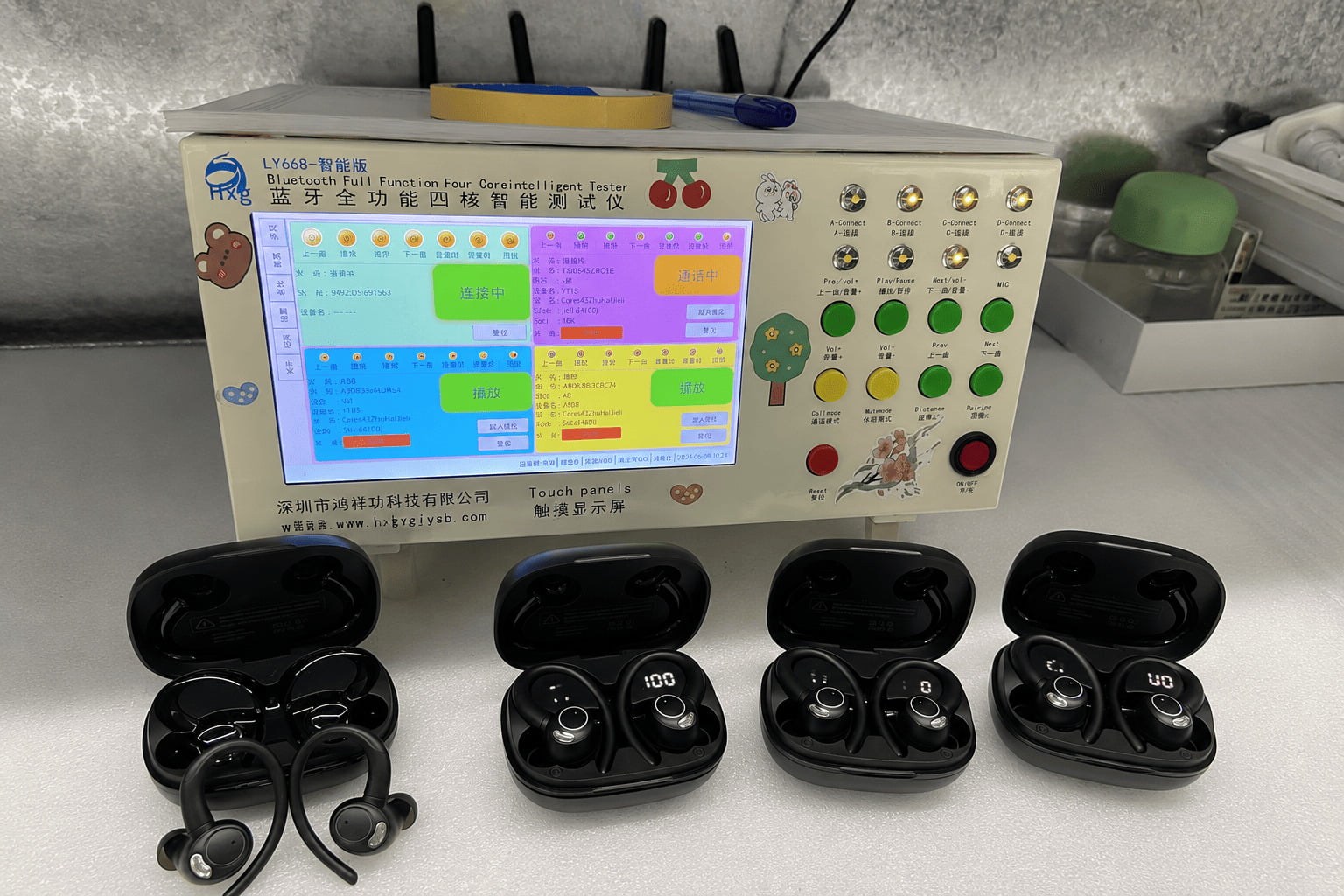
This is the final and most important gate. We don't just test one or two units from a batch. We test every single one. Each earbud is tested for Bluetooth pairing, touch controls, microphone clarity, and audio playback. But that’s not enough. To catch problems that appear over time, we perform an aging test. We take a percentage of the finished goods and put them in a dedicated aging room. There, they run for 4-8 hours straight, charging and discharging continuously. This process is excellent at finding hidden defects in batteries and charging circuits that a quick functional test would miss. Finally, before anything is packed, our Quality Assurance (QA) team steps in. They pull a random sample from the batch and perform a full inspection, from cosmetics to function, based on the internationally recognized AQL (Acceptable Quality Limit) standard11. Only if the batch passes this final inspection is it approved for packaging and shipment.
Conclusion
The production process in a professional factory is a system of risk control. It ensures the quality of your bulk order matches the sample and protects your brand's reputation.
A neutral quality-management or standards source can support why inspecting incoming materials is a recognized method for preventing defects before production. ↩
A reliability-engineering source can explain that burn-in or aging tests are used to detect early-life failures in electronic products. ↩
A technical overview from Bluetooth SIG, a university, or a research source can support the chipset’s central role in connectivity, audio processing, and device features. ↩
Battery-safety research or government lab sources can support the link between cell defects, performance degradation, charging problems, and safety hazards. ↩
An acoustics or audio-engineering source can confirm that these parameters are standard measurements used to assess sound output and consistency. ↩
A PCB manufacturing or engineering reference can support that SMT is the standard automated process for placing miniature components on circuit boards. ↩
An audio-engineering source can support that closely matched left/right transducers reduce channel imbalance and preserve stereo performance. ↩
A neutral engineering source can verify that AOI is commonly used in PCB assembly to identify missing, misaligned, or poorly soldered components. ↩
A materials-engineering or manufacturing source can explain how ultrasonic welding joins thermoplastics and why it is used for clean, durable assemblies. ↩
An electrical-safety or battery-safety source can support that insulation damage or pinched conductors may cause short circuits and related hazards. ↩
ISO 2859-1 or a standards reference can support that AQL sampling is a recognized method for random inspection of production lots. ↩