How Can You Customize Bluetooth Earbuds from Scratch?
Want custom earbuds but feel overwhelmed by all the options? The idea of "from scratch" can be confusing and might lead to costly mistakes. I will show you how to navigate the real customization paths based on your project.
Customizing Bluetooth earbuds successfully means understanding that "from scratch" rarely means starting raw. Instead, it involves making strategic trade-offs based on your order volume, budget, and market needs, primarily leveraging pre-validated components to achieve your unique product vision efficiently and cost-effectively.
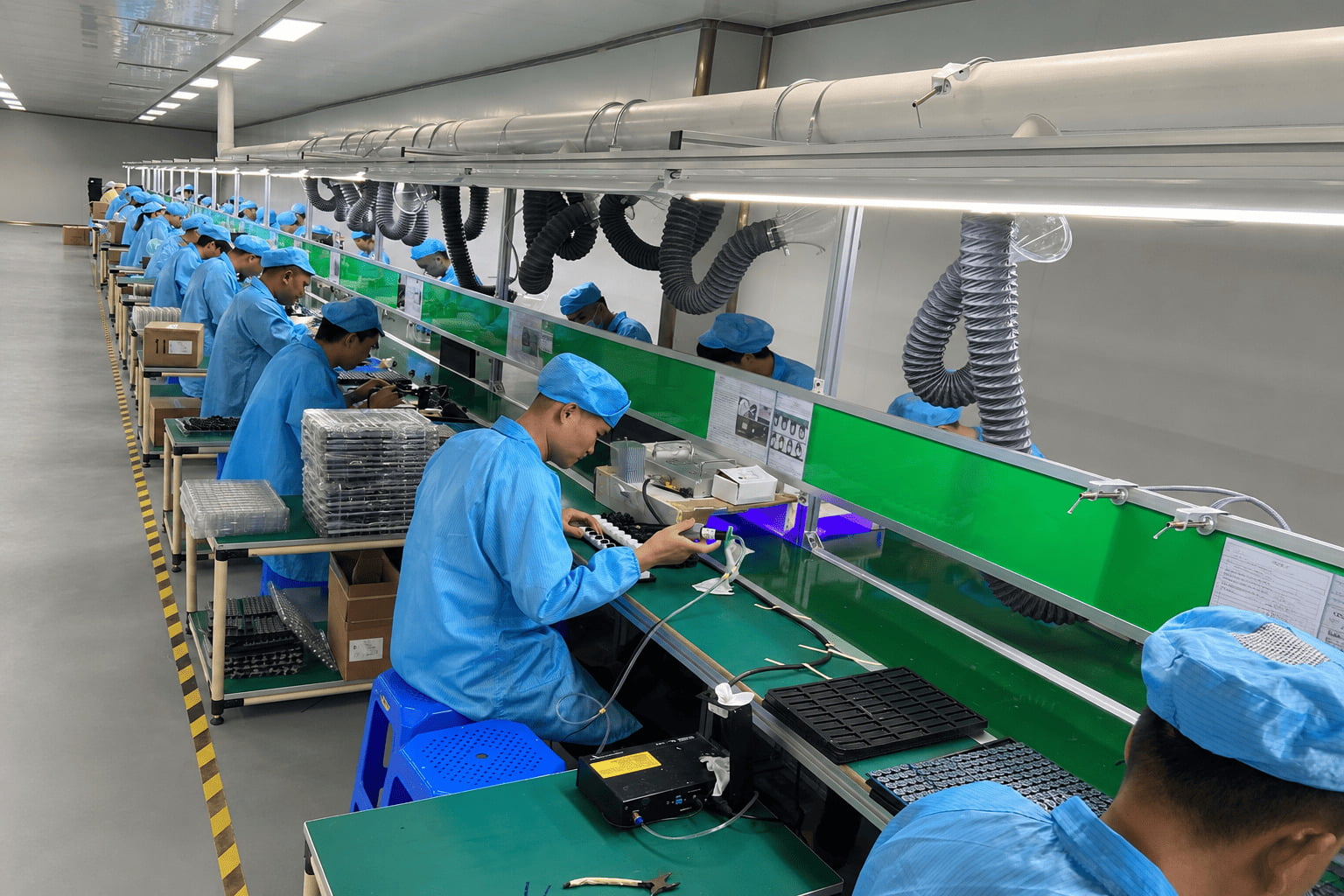
Getting into the world of custom Bluetooth earbuds can feel like a big challenge. Many of our clients come to us with a clear vision, but they often do not know how to turn that vision into a product without breaking the bank or taking too much time. From my experience as an OEM/ODM sales manager, I see how important it is to make smart choices early on. Let's look closer at how this process works and how you can get the best results for your business.
How Does Your Order Volume Shape Earbud Customization?
Dreaming of unique earbuds but worried about the costs? Your order volume dictates what is truly possible and affordable for your project. Let me show you how to align your vision with your budget.
Your order volume directly impacts available customization options, especially for chipsets, tooling, and certifications. Smaller orders (e.g., 5,000 units) often rely on existing designs, while larger volumes (e.g., 50,000 units) unlock deeper, more unique modifications and dedicated tooling.1
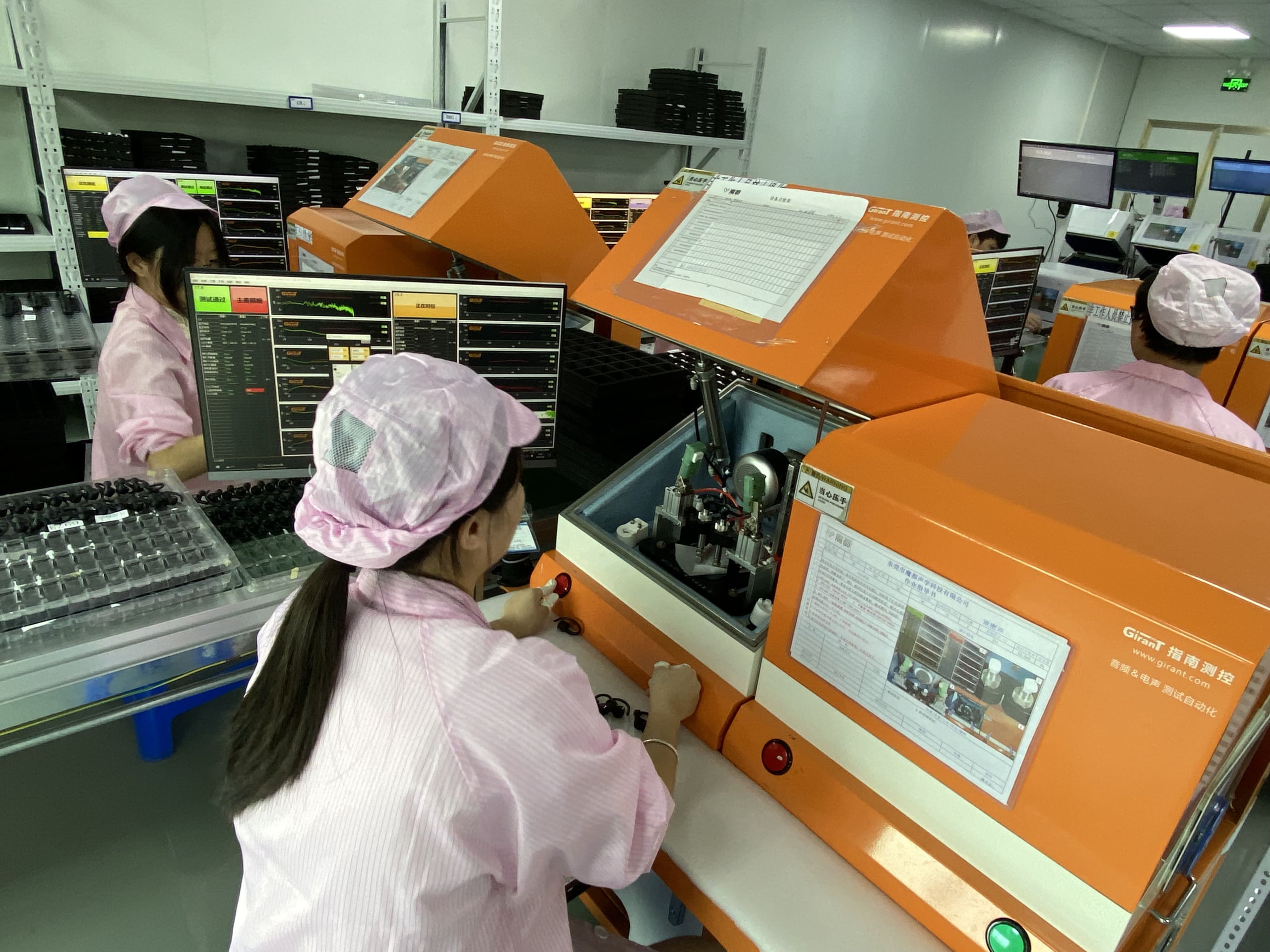
From our project experience, the number of units you plan to order is one of the most important things to consider. It changes everything. For example, if you are looking for an order volume around 5,000 units, your choices for customization will be different from a client ordering 50,000 units or more.
For clients with smaller order volumes, say 5,000 to 10,000 units, we usually guide them towards existing, proven designs. This means we can customize things like:
- Branding: Your logo on the product and packaging.
- Color: Choosing from a range of available colors.
- Acoustic Tuning: Making small adjustments to the sound profile using standard drivers.
- Packaging: Designing custom boxes and manuals.
However, certain "deep" customizations become very costly at this volume. Things like new injection molds for unique shapes2 or custom-developed firmware for a brand-new chipset feature are often not practical. The initial investment for such changes, known as tooling costs, would make the per-unit price too high. Also, certification processes like CE, FCC, or RoHS can add a lot to the cost3, and for smaller runs, these costs do not spread out enough to be affordable. We often see clients in this volume range needing to make trade-offs, like using a standard earbud shape to save on tooling, or focusing on strong acoustic performance with an existing housing rather than an entirely new physical design.
Now, if your order volume is 50,000 units or more, the doors open to much more extensive customization. At this scale, the tooling costs for new molds or the engineering fees for unique firmware become much more reasonable when divided across many units. This is where we can truly talk about:
- New Industrial Design (ID): Creating completely new earbud shapes and charging case designs.
- Custom Chipset Integration: Working with specific Bluetooth chipsets to get unique features like very low latency or advanced ANC (Active Noise Cancellation4).
- Specialized Acoustic Design: Developing custom drivers or speaker components for a signature sound.
- Advanced Features: Integrating features like multi-device pairing or specific touch controls that require deeper hardware and software work.
For these larger projects, certification costs are still there, but they become a smaller percentage of the overall unit cost. This means clients can pursue more aggressive product differentiation without being priced out. It's a big difference, and understanding this early saves a lot of time and avoids frustration.
What Does "Customizing Earbuds from Scratch" Really Involve?
The idea of "from scratch" sounds exciting but can be misleading. Many people think it means starting with raw materials, but that is not always the case. I will clarify what real customization means for earbuds.
"Customizing from scratch" for earbuds typically means adapting existing, validated component combinations and designs, not building every part raw. True greenfield design, like new molds or chipset firmware, is usually reserved for very high volumes due to significant R&D and tooling costs.

When a client says they want to customize earbuds "from scratch," my first thought is always to understand what they really mean. In most cases, it does not mean designing a brand-new Bluetooth chipset or inventing a new type of battery. That kind of fundamental innovation is typically done by chip manufacturers or R&D labs, not usually by earbud brands looking for OEM/ODM services.
What we do, based on our 15 years of experience, is work within a framework of pre-validated components and designs. Think of it like a very advanced LEGO set. We have access to a wide range of:
- Bluetooth Chipsets: From major suppliers, offering different features like ANC, ENC, low latency, and power efficiency.
- Acoustic Drivers: Various sizes and types (dynamic, balanced armature5) that deliver different sound profiles.
- Batteries: Different capacities and form factors for earbuds and charging cases.
- Microphones: For voice calls and active noise cancellation.
- Existing Tooling: A library of proven earbud and charging case designs.
Most customization happens by skillfully combining these validated components and adapting existing industrial designs. For example, a client might want a specific sound signature. We would then select the right driver, pair it with a compatible chipset, and tune the acoustics within an existing earbud housing. This is still "custom," as the final product is unique to their brand and market needs, but it builds on a foundation of components we know work together reliably. This approach greatly reduces risk, time, and cost compared to trying to design every single element from zero. True "greenfield" design – where we develop a completely new plastic mold for a unique earbud shape that has never existed – only really makes financial sense for clients with very large order volumes, typically well over 50,000 units, because the cost of creating these new molds is significant. Our role is to guide clients to the most efficient customization path that meets their goals without unnecessary R&D or tooling investments.
What Hidden Constraints Will My Earbud Project Uncover?
You have a great earbud idea, but you might hit unexpected roadblocks. Many clients discover budget, timeline, or market conflicts only when quoting starts. I can help you anticipate these.
Custom earbud projects often reveal hidden constraints in budget, timeline, or target retail price. Your desired features might conflict with certification costs or minimum order quantities, pushing you to re-evaluate priorities. Understanding these early avoids costly delays.
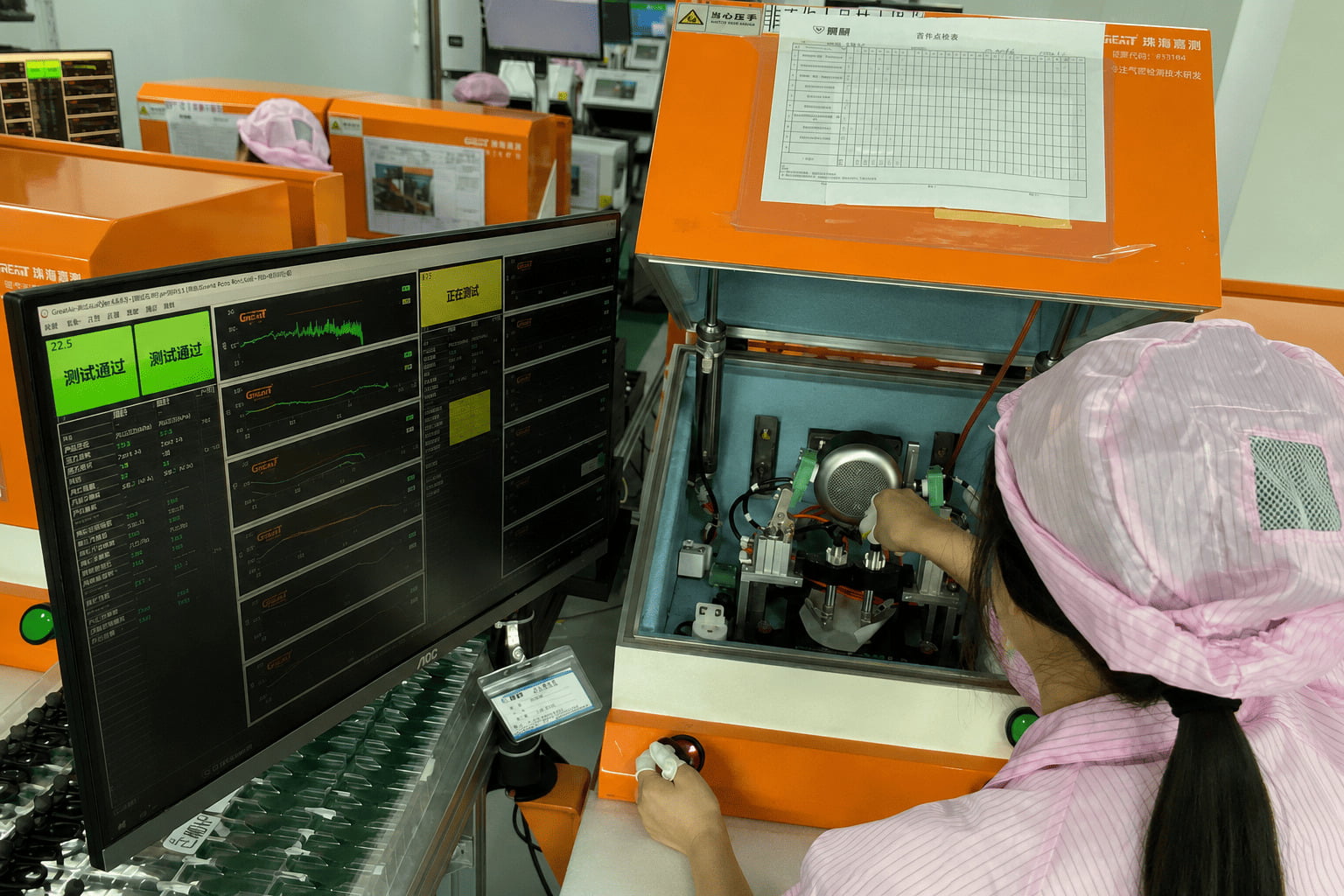
I have seen many clients come to us with a clear picture of their dream earbuds. They have a list of features, a target price, and a timeline. But very often, during the quoting phase, we uncover hidden constraints. These are the "gotchas" that can slow down a project or force big changes. From my perspective, these often come down to three main areas: feature-cost conflicts, certification surprises, and timeline pressures.
Here are some common hidden constraints we encounter:
-
Feature vs. Budget Conflict:
- Client Request: "I want ANC, Transparency Mode6, very long battery life, and spatial audio7, all for under $20 per unit at 10,000 pieces."
- Reality: Each of these advanced features requires specific, often higher-end, chipsets and components. For example, a good ANC solution alone can add significant cost per unit. Combining many high-end features with a strict budget for a mid-range order volume usually means a compromise. We might need to scale back on one or two features, or increase the per-unit cost. A typical client mistake is asking for premium features without understanding the component and software licensing costs involved.
-
Certification Surprises:
- Client Request: "We need CE, FCC, and RoHS for our new product, and we want to launch in 3 months."
- Reality: While essential, certifications take time and money. Each certificate has a cost, and the testing process can take weeks or even months.8 If a client wants a totally new industrial design, the certification process might be longer than for an existing design. Also, specific market requirements (e.g., Japanese PSE, Korean KC9, or new EU regulations) can add layers of complexity and cost. Sometimes, a client insists on a very niche feature that, unexpectedly, requires additional specific testing, doubling their certification budget.
-
Minimum Order Quantity (MOQ) for Specific Components:
- Client Request: "I love this unique custom color and material finish, and I want a custom-designed speaker driver."
- Reality: While we can source many parts, some specialized materials, unique color dyes, or custom-made components have high MOQs from their suppliers. If a client's total earbud order is 5,000 units, but the custom material supplier requires 20,000 units worth of material, it becomes a mismatch. This forces the client to either absorb the cost of unused material or switch to a more standard option.
My job is to help clients see these potential roadblocks early. By discussing these constraints upfront, we can adjust the project plan, manage expectations, and find the right balance between ambition and reality, saving both time and money in the long run.
How Do I Balance Features, Cost, and Timelines for My Custom Earbuds?
Trying to get the perfect earbuds but struggling with balancing features, cost, and speed? It is a common challenge. Let me guide you through making smart trade-offs for your project's success.
Balancing features, cost, and timelines in earbud customization requires strategic decision-making aligned with your sales risk. Prioritize what matters most for your market. Aggressive cost targets might mean fewer certifications or standard designs, while differentiation needs more investment and time.
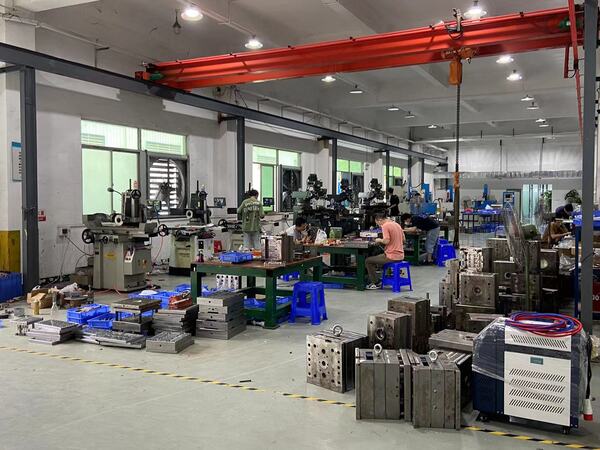
From what I see every day, successful earbud customization is not about getting everything you want. It is about making smart trade-offs. You always have to balance three big things: features, cost, and timeline. You cannot usually maximize all three at once. If you push for very low cost and a very fast timeline, you will likely lose out on some advanced features. If you want every high-end feature, it will probably cost more and take longer.
Here is how I help clients think through these decisions, focusing on what we call "sales risk":
-
Aggressive Cost Targets vs. Certification Requirements:
- Scenario: A client wants earbuds for a very competitive market, aiming for the lowest possible unit cost.
- Trade-off: To hit a very aggressive cost target, we might need to use standard, pre-certified chipsets and existing designs. This saves on new certification costs and tooling. However, if the client then wants to sell in many different countries with strict regulations (like specific European or Asian markets), the cost of getting those additional certifications later can easily wipe out the initial cost savings.
- Decision: You need to decide: Is saving a few cents per unit worth the risk of being limited to fewer markets or having higher certification costs later? My advice is to understand your target markets clearly from the start.
-
Fast Market Entry vs. Product Differentiation:
- Scenario: A client needs to launch a new earbud product very quickly to capture a seasonal trend or respond to a competitor.
- Trade-off: A fast timeline usually means sticking to proven designs and component combinations we already have in our factory. This means less unique differentiation. If a client insists on a completely new design or cutting-edge feature, the timeline will naturally extend due to new tooling, sampling, and testing.
- Decision: Is it more important to be first to market with a solid, but perhaps less unique, product? Or is it better to take more time to develop something truly different, even if it means missing an immediate market window? Clients often struggle here. For example, one client wanted a very unique charging case but needed a 3-month launch. We had to explain that the new mold alone would take 6-8 weeks, making their timeline impossible for that specific feature. They chose a standard case to meet the deadline.
-
High-End Features vs. Target Retail Price:
- Scenario: A client wants to offer premium features like lossless audio10, personalized sound profiles, and multi-point connectivity11.
- Trade-off: These features require advanced chipsets, more complex software, and often higher-quality drivers. These components naturally cost more. If the target retail price is in the budget segment, the margins will be too thin, or the production cost will simply exceed what the market will pay.
- Decision: You must match your feature set with what your end customer is willing to pay. Sometimes, having one or two standout features (e.g., excellent ANC) is better than having many average features that make the product too expensive for its target market.
My role is to help you see these paths clearly and understand the consequences of each choice. We work together to find the best balance that matches your project's goals and reduces your sales risk.
Conclusion
Customizing Bluetooth earbuds means making smart trade-offs based on volume, budget, and market needs. It is about navigating real-world constraints to create unique products effectively.
"Economies of scale - Wikipedia", https://en.wikipedia.org/wiki/Economies_of_scale. Manufacturing economics research demonstrates that tooling amortization costs create volume-dependent thresholds for custom component feasibility, though specific breakpoints vary by product category and tooling complexity. Evidence role: mechanism; source type: research. Supports: how tooling costs and economies of scale affect customization feasibility at different production volumes. Scope note: Exact volume thresholds (5,000 vs 50,000) are product-specific and may not generalize across all electronics categories ↩
"Injection moulding - Wikipedia", https://en.wikipedia.org/wiki/Injection_moulding. Injection molding is a manufacturing process where molten plastic is injected into custom-designed metal molds under high pressure, enabling mass production of complex plastic parts with consistent dimensions, widely used for consumer electronics housings. Evidence role: mechanism; source type: education. Supports: how injection molding is used to manufacture custom plastic components. ↩
"How Much Does FCC Certification Cost? - Compliance Testing", https://compliancetesting.com/fcc-certification-faqs/fcc-certification-cost/. Regulatory compliance testing for consumer electronics typically involves fees ranging from several thousand to tens of thousands of dollars per certification body, depending on product complexity and testing requirements. Evidence role: statistic; source type: government. Supports: typical cost ranges for mandatory electronics certifications. Scope note: Costs vary significantly based on product category, testing scope, and whether pre-compliance testing is required ↩
"Engineering Healthy Silence: Using Noise-Cancelling Headphones ...", https://illumin.usc.edu/engineering-healthy-silence-using-noise-cancelling-headphones-to-block-harmful-sound/. Active noise cancellation is an acoustic technique that uses destructive interference to reduce unwanted ambient sound by generating inverse sound waves through microphones and signal processing. Evidence role: definition; source type: encyclopedia. Supports: the technical definition and operating principle of active noise cancellation. ↩
"IEM ELI5: Balanced Armature vs Dynamic Drivers?", https://www.reddit.com/r/headphones/comments/55wkxh/iem_eli5_balanced_armature_vs_dynamic_drivers/. A balanced armature driver is a miniature electromagnetic transducer originally developed for hearing aids, using a suspended armature between magnetic poles to drive a diaphragm, offering advantages in size and efficiency for in-ear applications. Evidence role: definition; source type: encyclopedia. Supports: the technical definition and operating principle of balanced armature drivers. ↩
"Active Noise Cancellation and Transparency modes for AirPods", https://support.apple.com/en-us/108918. Transparency mode (also called ambient sound or hear-through mode) is an audio feature that uses external microphones to actively pass environmental sounds through to the listener, allowing awareness of surroundings while wearing noise-isolating earbuds. Evidence role: definition; source type: research. Supports: the technical definition and purpose of transparency mode in ANC devices. ↩
"Binaural recording - Wikipedia", https://en.wikipedia.org/wiki/Binaural_recording. Spatial audio refers to audio processing techniques that create a three-dimensional sound field around the listener, typically using head-tracking, binaural rendering, or object-based audio to simulate directional sound sources beyond traditional stereo imaging. Evidence role: definition; source type: research. Supports: the technical definition and mechanism of spatial audio. Scope note: Implementation methods vary significantly across platforms and devices, with different approaches to achieving spatial effects ↩
"Equipment Authorization | Federal Communications Commission", https://www.fcc.gov/engineering-technology/laboratory-division/general/equipment-authorization. Regulatory certification testing for consumer electronics typically requires several weeks to several months depending on product complexity, testing scope, and laboratory scheduling, with expedited services available at additional cost. Evidence role: general_support; source type: government. Supports: typical duration of regulatory certification testing processes. Scope note: Timelines vary significantly based on product category, certification body, testing backlog, and whether initial submissions pass without requiring retesting ↩
"Act on Product Safety of Electrical Appliances and Materials", https://en.wikipedia.org/wiki/Act_on_Product_Safety_of_Electrical_Appliances_and_Materials. PSE (Product Safety Electrical Appliance and Materials) is Japan's mandatory safety mark for electrical products, while KC (Korea Certification) is South Korea's unified certification mark for electrical and telecommunications equipment, both requiring compliance testing before market entry. Evidence role: definition; source type: government. Supports: the existence and purpose of PSE and KC as mandatory safety certifications. ↩
"Lossless compression - Wikipedia", https://en.wikipedia.org/wiki/Lossless_compression. Lossless audio compression reduces file size while preserving all original audio data, allowing perfect reconstruction of the source, in contrast to lossy compression which permanently discards information to achieve smaller file sizes. Evidence role: definition; source type: encyclopedia. Supports: the technical definition of lossless audio compression. ↩
"List of Bluetooth profiles", https://en.wikipedia.org/wiki/List_of_Bluetooth_profiles. Bluetooth multipoint is a profile feature that enables a single audio device to maintain simultaneous connections with multiple source devices, allowing users to switch between devices without manual re-pairing. Evidence role: definition; source type: research. Supports: the technical definition and function of Bluetooth multipoint connectivity. ↩