
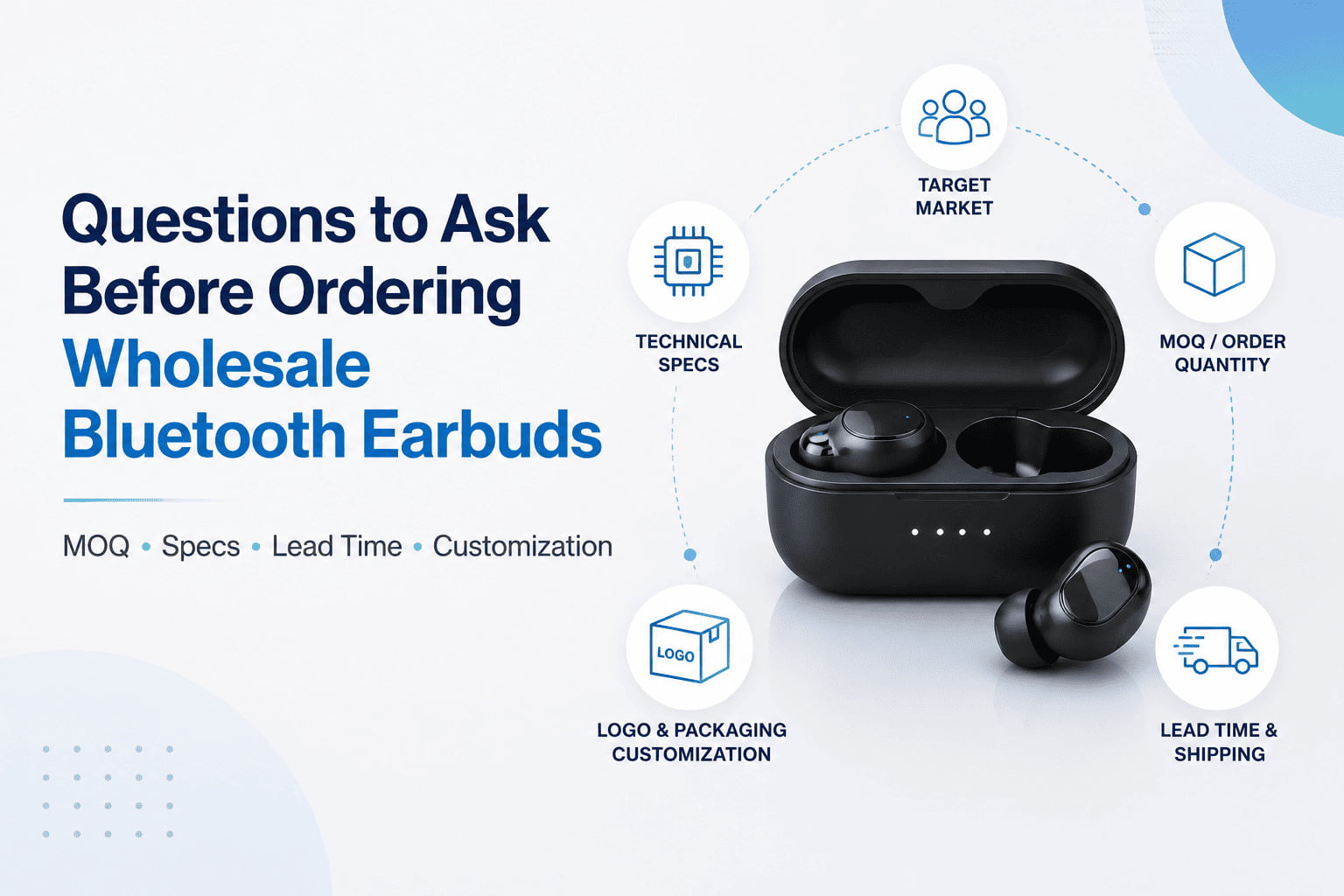
What Are the Essential Questions to Ask Before Ordering Wholesale Bluetooth Earbuds?
Sourcing wholesale Bluetooth earbuds can feel overwhelming when you first start looking. Don't let unclear requirements lead to costly mistakes. I will help you understand what really matters.
To get an accurate quote and the right product, you must clarify key aspects like your target market, specific technical requirements, desired quantity, and customization needs from the very beginning.
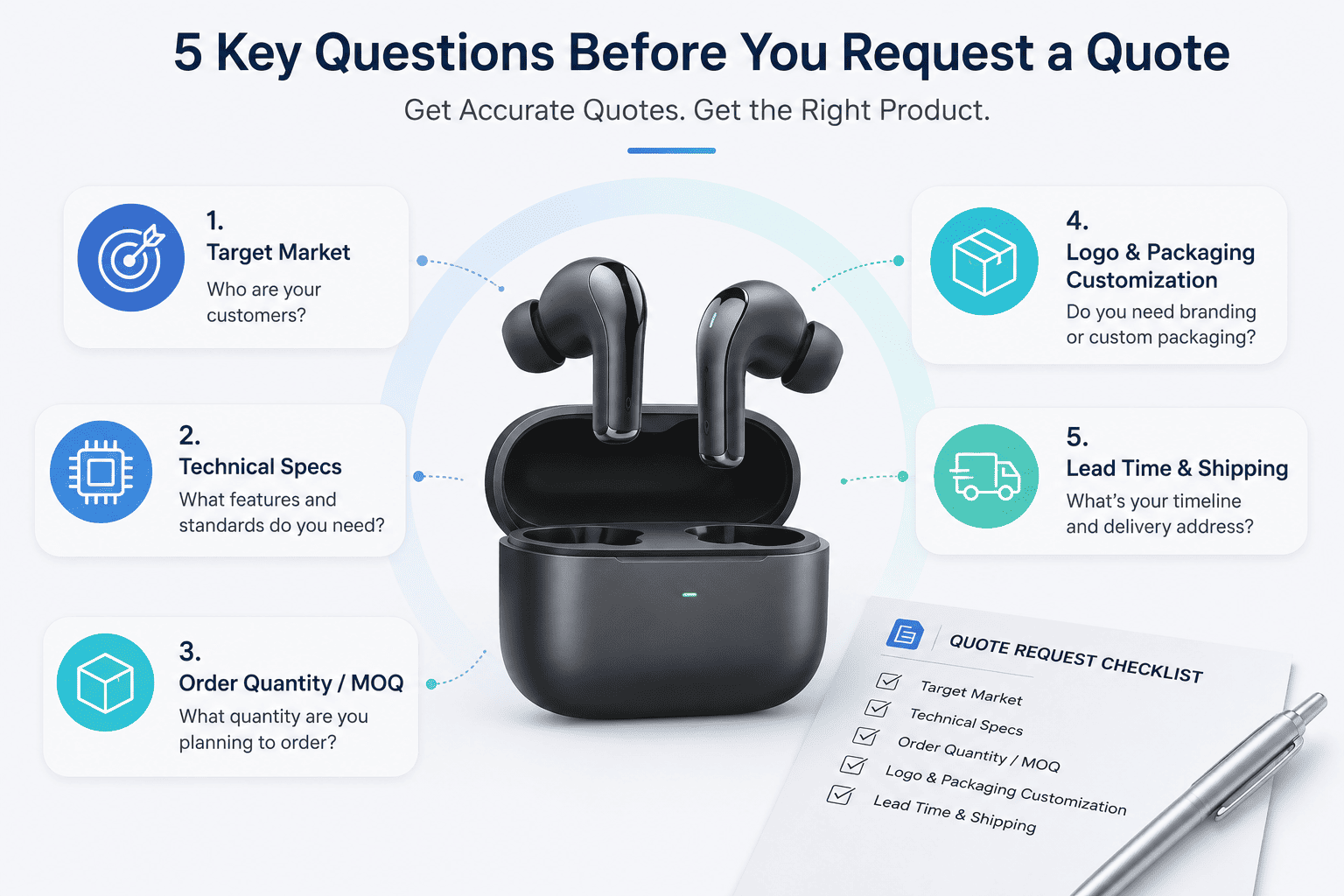
When buyers first contact me, they often have many questions. It's my job to help them turn these initial thoughts into clear requirements. This process helps ensure they get exactly what they need and avoid unexpected problems later.
Why Can't I Get a Quick Price Quote for Bluetooth Earbuds?
Are you frustrated by suppliers who don't give you an instant price? This common issue often means that essential details are still missing.
Getting an accurate price quote for wholesale Bluetooth earbuds requires confirming many specific details, such as the internal components, desired features, order quantity, and customization options, which all significantly affect the final cost.
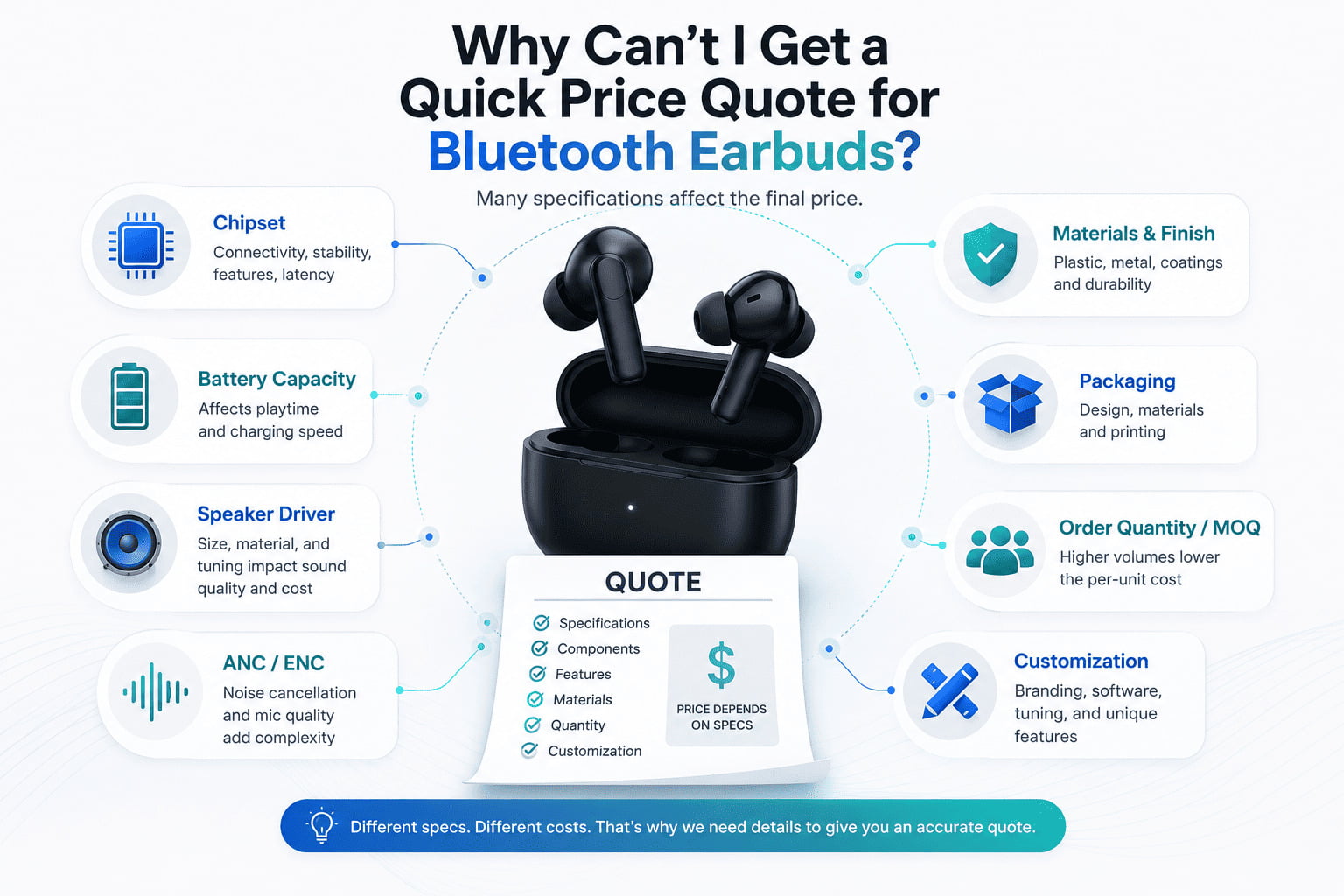
I often see buyers ask, "How much is this model?" before we've discussed any specific configurations. It's a natural first question. However, the price of a Bluetooth earbud is not a fixed number. It is a result of many choices. Think of it like buying a car; you cannot just ask "How much is a car?" without knowing the make, model, engine size, or added features. The same logic applies to earbuds. The internal components, such as the Bluetooth chipset1, are a major cost driver. For example, a basic chipset will cost far less than one supporting advanced features like Active Noise Cancellation (ANC)2 or low latency3. The battery capacity directly affects playtime and therefore the cost. The speaker driver size and material impact sound quality, which then affects price. The type and number of microphones determine call quality and features like Environmental Noise Cancellation (ENC)4. Even small details like the material of the ear tips or the finish of the charging case can change the price. My team and I need to know all these choices. This allows us to give a quote that is both accurate and fair. Without these details, any early quote would be a guess.
Key Factors Influencing Earbud Price:
- Internal Components:
- Bluetooth Chipset: Determines connectivity, stability, and advanced features (e.g., ANC, ENC, low latency). Different chipsets have different costs.
- Battery Capacity: Directly impacts playtime and charging speed. Larger batteries cost more.
- Speaker Driver: Size, material, and tuning affect sound quality. High-fidelity drivers are more expensive.
- Microphone Type: Standard versus advanced (e.g., bone conduction5, multiple mics for ENC).
- Functional Features:
- Noise Cancellation: Active Noise Cancellation (ANC) adds complexity and cost.
- Low Latency Mode: Important for gaming or video, requires specific chipsets.
- Multi-Device Pairing: Adds convenience but requires specific software.
- Water Resistance: IP rating6 significantly affects structural design and material costs.
- Materials and Design:
- Housing Material: Plastic, metal, special coatings.
- Charging Case: Material, size, and charging type (e.g., wireless charging).
- Packaging: Custom design, printing, and materials.
- Order Quantity: Higher volumes typically reduce the per-unit cost due to economies of scale in manufacturing7 and component purchasing.
- OEM/ODM Customization: Branding, acoustic tuning8, structural changes, and software development all add to the cost.
How Do I Define My Earbud Needs When I'm Not Sure What I Want?
Do you find yourself unsure how to describe the perfect earbud for your brand? Many buyers start with a general idea, and that is perfectly normal.
When you are unsure of your exact earbud needs, focus on your target market, sales channel, and product positioning first; this approach helps a supplier recommend suitable configurations and features that align with your business goals.
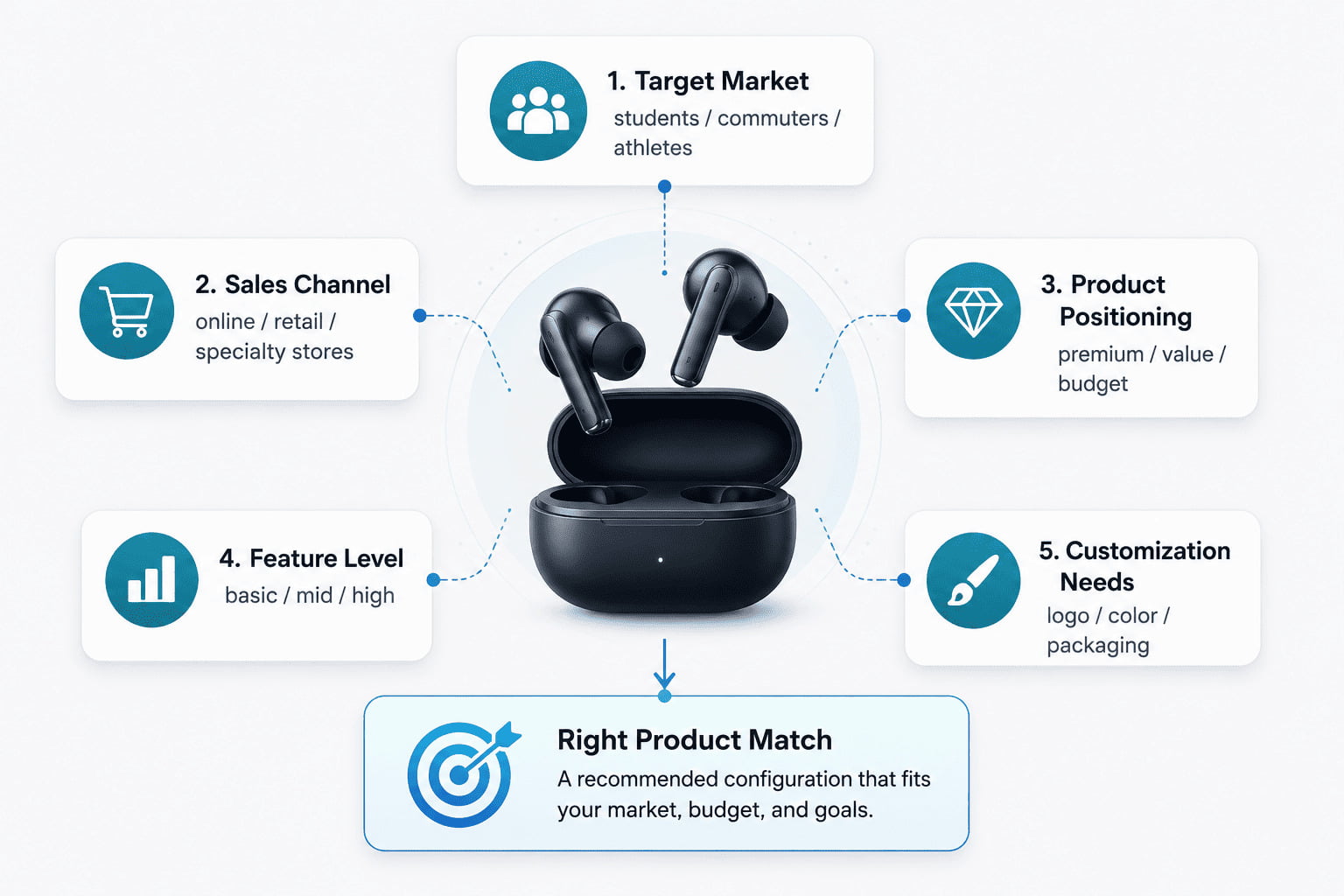
In my work, I've noticed that buyers often begin inquiries with a loose vision. They might say, "I need good quality earbuds," but "good quality" means different things to different people. My role then becomes helping to make that vision concrete. The first step is always understanding the target market. Who are your customers? Are they budget-conscious students, fitness enthusiasts, or demanding audiophiles? Their expectations directly influence the necessary specifications. Next, consider your sales channel. Will these earbuds be sold online, in big box retailers, or specialty stores? A product sold in a high-end electronics store will need different certifications and packaging than one sold in a convenience store. Product positioning then ties these elements together. Is your brand known for premium sound, durability, or affordability? The answers to these questions guide the configuration choices. For instance, a brand focused on budget-friendly options should not overspend on an expensive chipset with features their customers will not use. We can then look at a suitable configuration range, from basic models to feature-rich ones, ensuring the product fits the market and budget.
Guiding Your Product Definition:
| Category | Key Considerations | Impact on Earbud Configuration |
|---|---|---|
| Target Market | Who are your end-users? (e.g., students, commuters, athletes, professionals) What are their key needs and budgets? | Determines features like ANC (commuters), IP rating (athletes), battery life (travelers), and overall price point. |
| Sales Channel | Where will you sell them? (e.g., online, retail stores, duty-free, corporate gifts) | Influences packaging design, required certifications (e.g., CE, FCC), and marketing materials. |
| Product Positioning | What is your brand's message? (e.g., premium, value, durable, fashionable) What is the target retail price? | Guides material quality, design aesthetics, advanced features, and acoustic tuning. |
| Configuration Range | Do you need basic, mid-range, or high-end features? | Helps balance cost with desired performance for components like chipsets, drivers, and microphones. |
| Customization Needs | Do you need specific branding, colors, or unique software features? | Affects design complexity, tooling costs, and production timelines. |
What's the Connection Between MOQ, Lead Time, and Quotation Accuracy?
Are you wondering why Minimum Order Quantity (MOQ) and lead time pop up so early in discussions? These details are very important.
Minimum Order Quantity (MOQ), production lead time, and the accuracy of your price quote are closely linked; confirming your specific requirements, branding, and quantity beforehand helps ensure the initial quote remains stable and reliable.
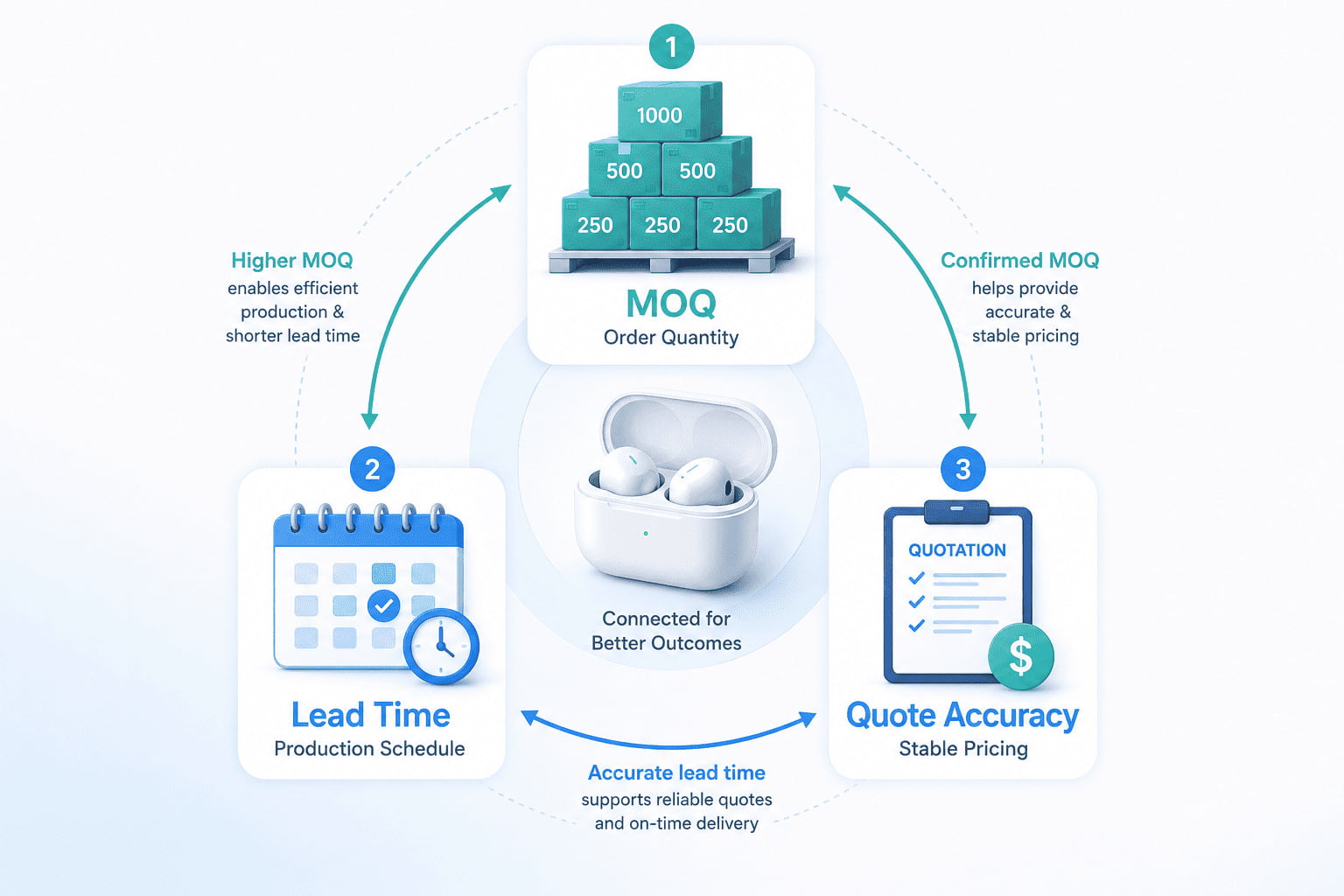
I have often seen situations where buyers receive an initial quote but then see it change later. This usually happens because key details like MOQ, branding, or packaging were not firm from the start. MOQ directly affects the per-unit cost. Manufacturers buy components in bulk. If your order quantity is too low, the cost savings from bulk purchasing components cannot be passed on. This means a higher MOQ often leads to a lower unit price. Lead time is equally critical. It tells you how long it will take to produce and ship your order. Lead time depends on many things. These include component availability, the complexity of your customization, and the factory's current production schedule. If a buyer needs a unique color or a custom-molded part, this adds time for tooling and material sourcing. If the specifications or quantity change after an initial quote, then both the price and the delivery schedule will likely change too. This is why I always stress confirming these details upfront. It prevents surprises and builds trust. An accurate quote relies on clear, final decisions on configuration, branding, packaging, and order quantity. Without these, any quote is preliminary and subject to change.
Are Higher Specifications Always Better for My Market?
Do you believe that only the most advanced earbuds will succeed? It's a common thought, but it is not always true.
Higher specifications are not inherently better for every market; the most successful Bluetooth earbuds are those whose features, budget, and retail price perfectly match the expectations and needs of their specific target customers and sales channels.
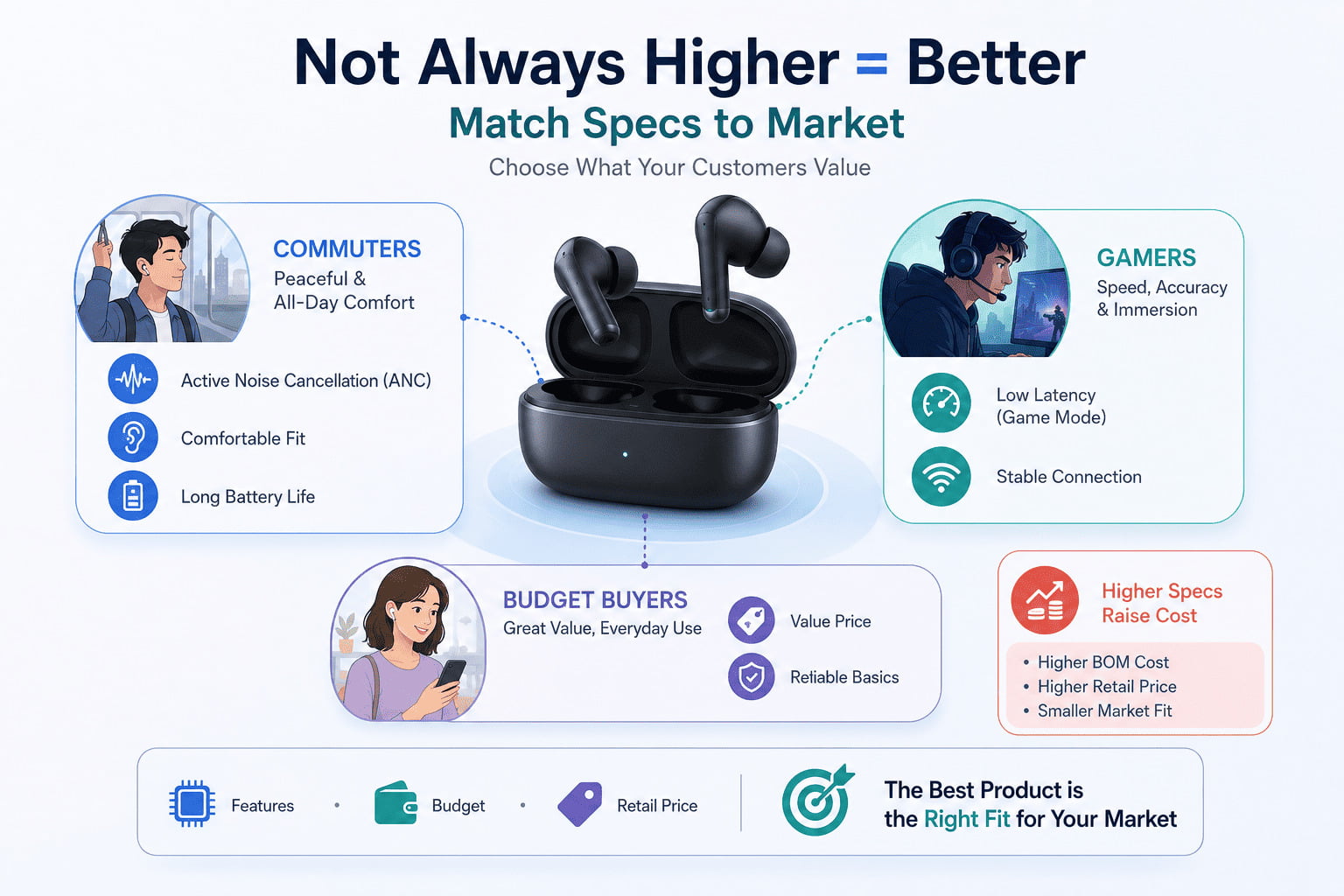
Many buyers think that they must include every high-end feature to compete. I help them understand that this is not always the best strategy. The goal is to find the right product for your market, not just the most feature-rich one. For instance, if your target customers are mainly looking for a reliable, basic earbud for calls and music during their commute, they might not need expensive Active Noise Cancellation (ANC) or multi-device pairing. Adding these features would increase the cost, push up your target retail price, and potentially price you out of your intended market. On the other hand, if you are targeting serious gamers, low latency is a must-have feature, and they will be willing to pay more for it. My experience shows that understanding your budget and target retail price is crucial. It helps you prioritize features that truly add value for your specific customer base. We also need to consider market-specific certifications. These are not about "higher specs" but about market access and consumer safety. For example, products sold in Europe need CE marking9, and those in the US need FCC approval10. These requirements ensure your product can be legally sold in your chosen sales channels. Choosing the right specifications is about making smart, targeted decisions that align with your business model.
Matching Specifications to Market:
| Factor | Considerations | Impact on Specification Choices |
|---|---|---|
| Budget & Retail Price | What is your cost budget per unit? What is the target retail price for the end-consumer? | Drives choices for chipset cost, battery capacity, material quality. Avoids over-specifying for a price-sensitive market. |
| Target Customer Needs | What are the primary uses? (e.g., music, calls, gaming, sports) What features do they value most? | Prioritize features like ANC (commuters), low latency (gamers), IPX rating (athletes), or extended battery life (travelers). |
| Sales Channel | Where will the product be sold? (e.g., discount stores, electronics chains, online boutiques) | Influences perceived value and competition. May dictate a balance between cost and performance. |
| Market Competition | What features do competitors offer at similar price points? How can your product differentiate? | Helps identify essential features to match and potential unique selling points without unnecessary additions. |
| Certification Needs | What regional or international certifications are required for your target markets (e.g., CE, FCC, RoHS11, REACH12)? | Ensures product compliance and market entry. Some certifications require specific component choices or testing, impacting cost and lead time. |
Conclusion
Understanding key questions about market, specifications, quantity, and customization early on prevents costly mistakes. It ensures you get an accurate quote and the perfect wholesale Bluetooth earbuds for your brand.
"Bluetooth - Wikipedia", https://en.wikipedia.org/wiki/Bluetooth. Bluetooth chipsets (often system-on-chip designs) integrate radio frequency transceivers, digital signal processors, and protocol stacks that manage wireless connectivity, audio codec processing, and power management, with chipset capabilities and manufacturing process nodes significantly affecting both performance features and component costs. Evidence role: mechanism; source type: education. Supports: the technical role and architecture of Bluetooth chipsets in wireless audio devices. Scope note: This explains chipset architecture and general cost factors but does not provide specific pricing data or feature-to-cost comparisons for earbud applications. ↩
"Active noise control - Wikipedia", https://en.wikipedia.org/wiki/Active_noise_control. Active noise cancellation uses microphones to detect ambient sound and generates inverse sound waves to cancel unwanted noise, requiring additional digital signal processing components and algorithms that increase both hardware complexity and manufacturing costs. Evidence role: mechanism; source type: encyclopedia. Supports: the technical mechanism of active noise cancellation and its implementation requirements. Scope note: This explains the mechanism but does not quantify specific cost increases for earbud manufacturing. ↩
"aptX - Wikipedia", https://en.wikipedia.org/wiki/AptX. Audio latency refers to the delay between audio signal transmission and playback; standard Bluetooth audio typically exhibits 100-300ms latency, which creates noticeable audio-video desynchronization in gaming and video, while low-latency codecs and chipsets can reduce this to under 40ms for improved synchronization. Evidence role: mechanism; source type: education. Supports: the technical definition of audio latency and its impact on gaming and video applications. Scope note: This explains latency and general requirements but does not specify which particular chipsets or codecs achieve low latency performance. ↩
"Active noise control - Wikipedia", https://en.wikipedia.org/wiki/Active_noise_control. Environmental Noise Cancellation (ENC) is a technology that uses multiple microphones and digital signal processing to isolate the user's voice from background noise during calls, primarily improving outgoing audio quality rather than reducing ambient sound for the listener. Evidence role: definition; source type: education. Supports: the technical definition and mechanism of environmental noise cancellation. Scope note: This defines the technology but does not address specific implementation costs or microphone requirements. ↩
"Bone conduction - Wikipedia", https://en.wikipedia.org/wiki/Bone_conduction. Bone conduction microphones detect voice vibrations transmitted through skull bones rather than airborne sound waves, potentially offering improved voice pickup in noisy environments by reducing ambient noise interference, though implementation requires specialized sensors positioned against the user's skin or cartilage. Evidence role: mechanism; source type: education. Supports: the technical mechanism of bone conduction microphone technology. Scope note: This explains the mechanism but does not address specific implementation challenges or cost implications for earbud integration. ↩
"IP code - Wikipedia", https://en.wikipedia.org/wiki/IP_code. The IP (Ingress Protection) rating system, defined by IEC standard 60529, classifies the degree of protection against solid objects and liquids, with higher ratings requiring sealed enclosures, specialized gaskets, and water-resistant materials that increase design complexity and component costs. Evidence role: definition; source type: institution. Supports: the definition and technical requirements of IP (Ingress Protection) ratings. Scope note: This explains the rating system and general design implications but does not quantify specific cost increases for earbud manufacturing. ↩
"Economies of scale - Wikipedia", https://en.wikipedia.org/wiki/Economies_of_scale. Economies of scale occur when increased production volume spreads fixed costs across more units and enables bulk purchasing discounts, resulting in lower per-unit costs—a principle widely observed in manufacturing industries including electronics. Evidence role: definition; source type: encyclopedia. Supports: the economic principle of economies of scale in manufacturing contexts. Scope note: This establishes the general economic principle but does not provide specific data for Bluetooth earbud manufacturing. ↩
"Headphones - Wikipedia", https://en.wikipedia.org/wiki/Headphones. Acoustic tuning involves adjusting physical design parameters (driver positioning, acoustic chambers, damping materials) and digital signal processing to achieve a desired frequency response and sound signature, requiring iterative testing and engineering expertise that adds development time and cost to custom earbud production. Evidence role: definition; source type: education. Supports: the definition and process of acoustic tuning in audio device development. Scope note: This defines the process but does not quantify typical costs or timelines for acoustic tuning in OEM/ODM earbud manufacturing. ↩
"EU Legislation and CE Marking - International Trade Administration", https://www.trade.gov/country-commercial-guides/eu-eu-legislation-and-ce-marking. CE marking is legally required for many product categories, including electronic devices, sold within the European Economic Area, indicating conformity with EU health, safety, and environmental protection standards under various directives. Evidence role: general_support; source type: government. Supports: the legal requirement for CE marking on products sold in the European Economic Area. Scope note: This confirms the general requirement but does not specify which particular directives apply to Bluetooth earbuds. ↩
"Equipment Authorization – RF Device | Federal Communications ...", https://www.fcc.gov/oet/ea/rfdevice. The Federal Communications Commission requires authorization for radio frequency devices, including Bluetooth products, marketed or sold in the United States to ensure compliance with technical standards that prevent harmful interference with communications services. Evidence role: general_support; source type: government. Supports: the legal requirement for FCC authorization for radio frequency devices sold in the United States. Scope note: This confirms the general requirement but does not detail the specific testing or certification process for Bluetooth earbuds. ↩
"RoHS - Wikipedia", https://en.wikipedia.org/wiki/RoHS. RoHS (Restriction of Hazardous Substances) is a European Union directive that restricts the use of specific hazardous materials, including lead, mercury, and cadmium, in electrical and electronic equipment to reduce environmental and health risks, with compliance mandatory for products sold in the EU market. Evidence role: definition; source type: government. Supports: the definition and purpose of RoHS certification. Scope note: This defines the directive but does not detail specific testing requirements or material restrictions relevant to Bluetooth earbud components. ↩
"Registration, Evaluation, Authorisation and Restriction of Chemicals", https://en.wikipedia.org/wiki/Registration,_Evaluation,_Authorisation_and_Restriction_of_Chemicals. REACH (Registration, Evaluation, Authorisation and Restriction of Chemicals) is a European Union regulation governing the production and use of chemical substances, requiring manufacturers and importers to identify and manage risks associated with chemicals in their products, including consumer electronics. Evidence role: definition; source type: government. Supports: the definition and scope of REACH regulation. Scope note: This defines the regulation but does not specify which particular chemical restrictions or registration requirements apply to Bluetooth earbud manufacturing. ↩